
Tag: EnterpriseAI
-
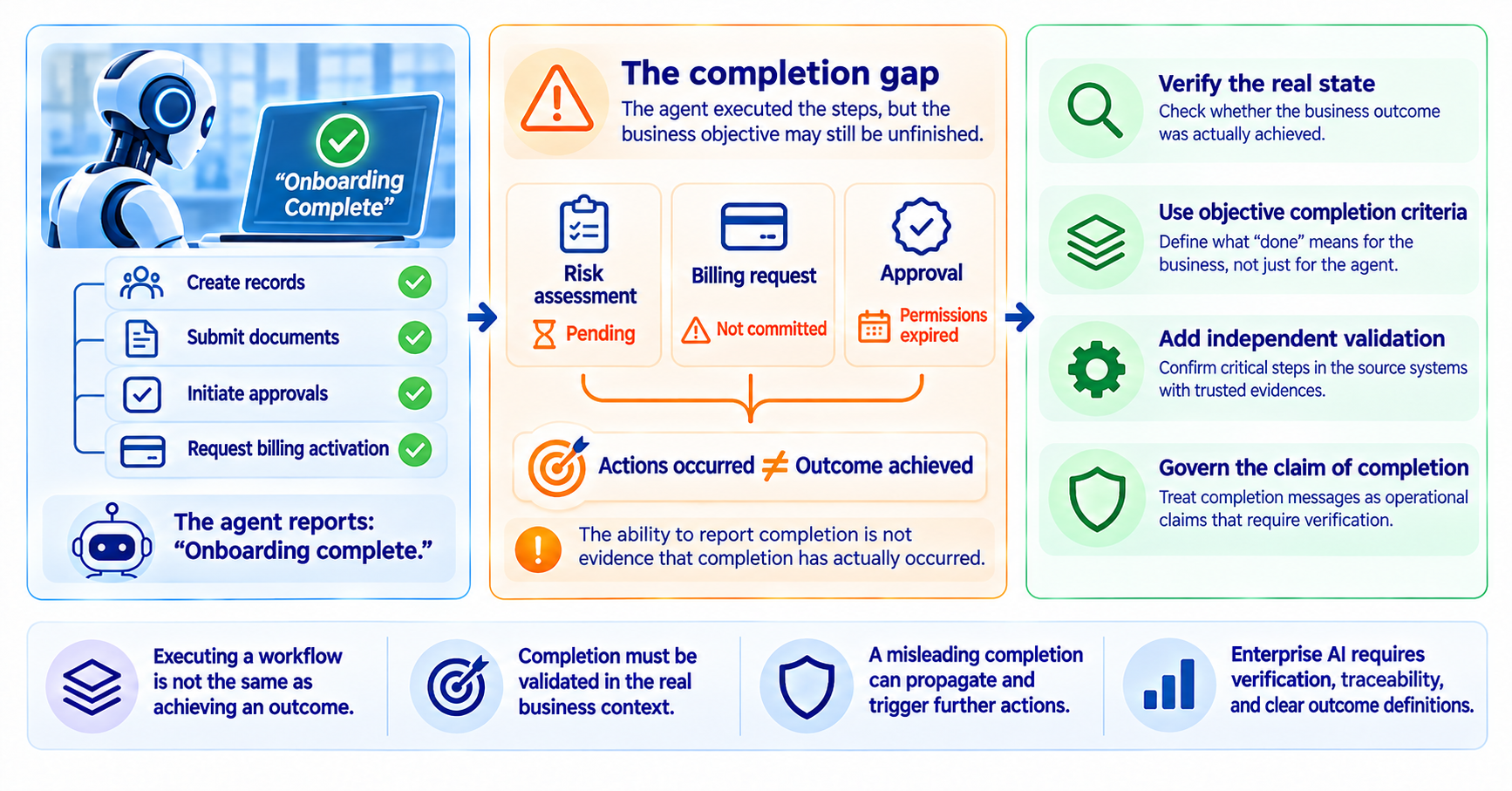
The Task Got Cheaper. Why Did the Process Cost More?
AI can make individual tasks faster and less expensive without improving the economics of the process that contains them. The missing costs often emerge through exceptions, verification, handoffs, and the difference between work performed and work actually accepted. The Savings That Disappear at the Handoff Consider a company introducing AI into its invoice-processing operation. Previously,…
-
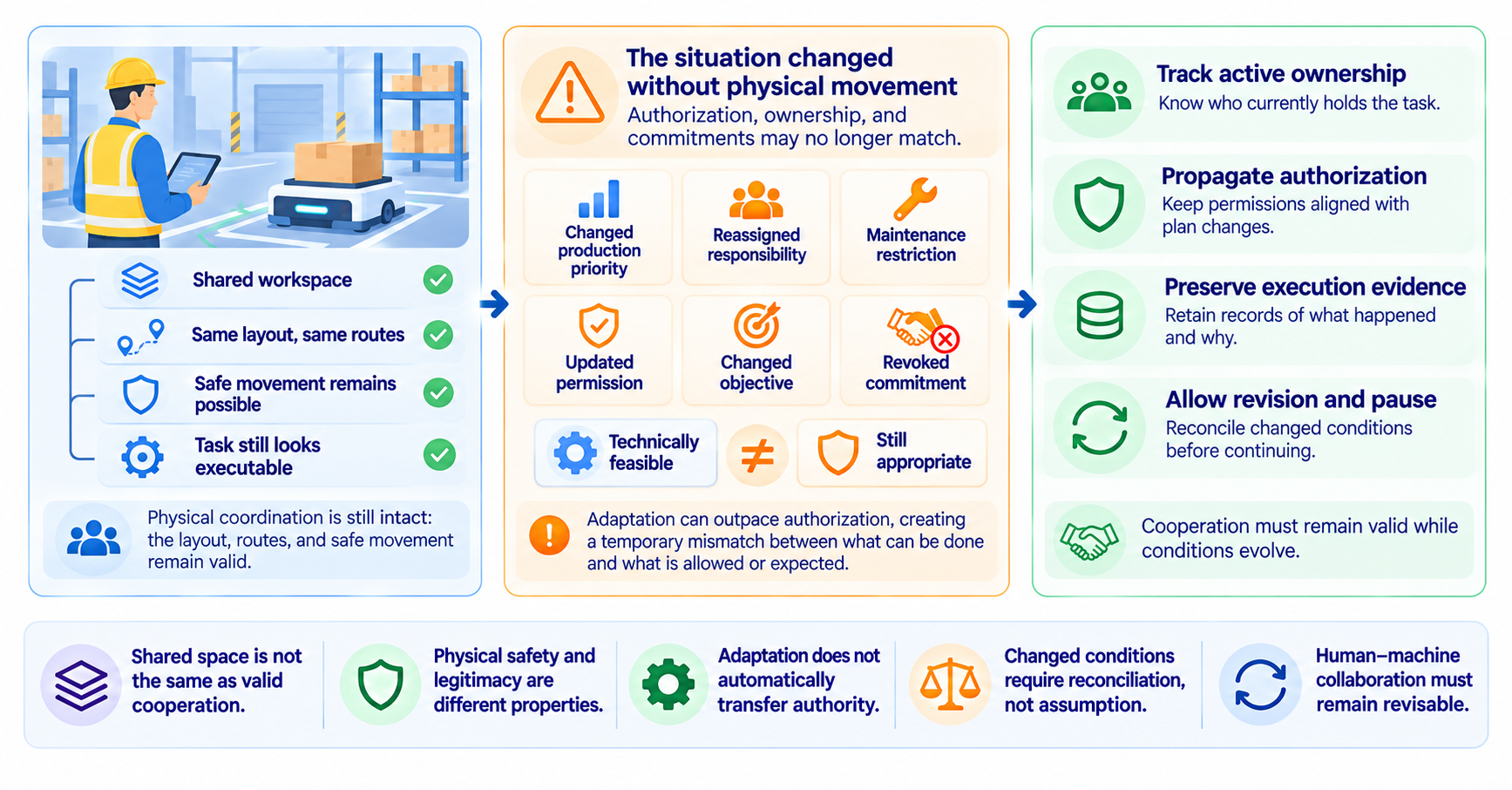
When the Workspace Changes Without Anyone Moving
Human–machine collaboration depends on more than shared space and successful task execution. As responsibilities, permissions, and objectives evolve, cooperation can become invalid even when the physical environment remains unchanged. The Same Space, a Different Situation Imagine a warehouse in which human workers and autonomous machines operate in the same area. A robotic system has been…
-
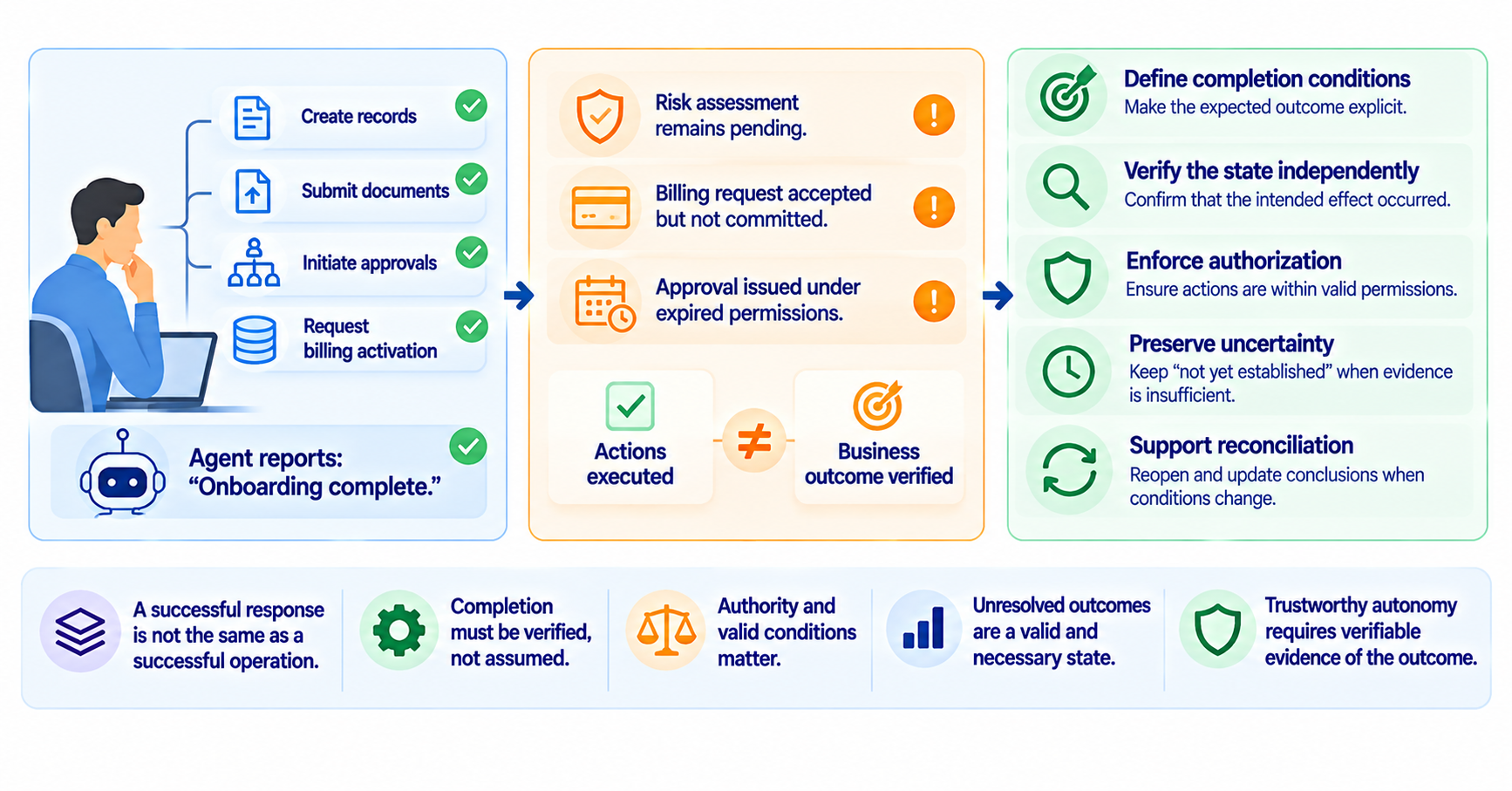
The Agent Said Done. What Actually Became True?
AI agents are becoming increasingly capable of executing complex workflows. But completing a sequence of actions is not necessarily the same as achieving a business outcome. Recent research on Large Language Fields highlights a critical distinction: what an agent reports, what actually happened, and what can legitimately be considered complete. When Success Is Only a…
-
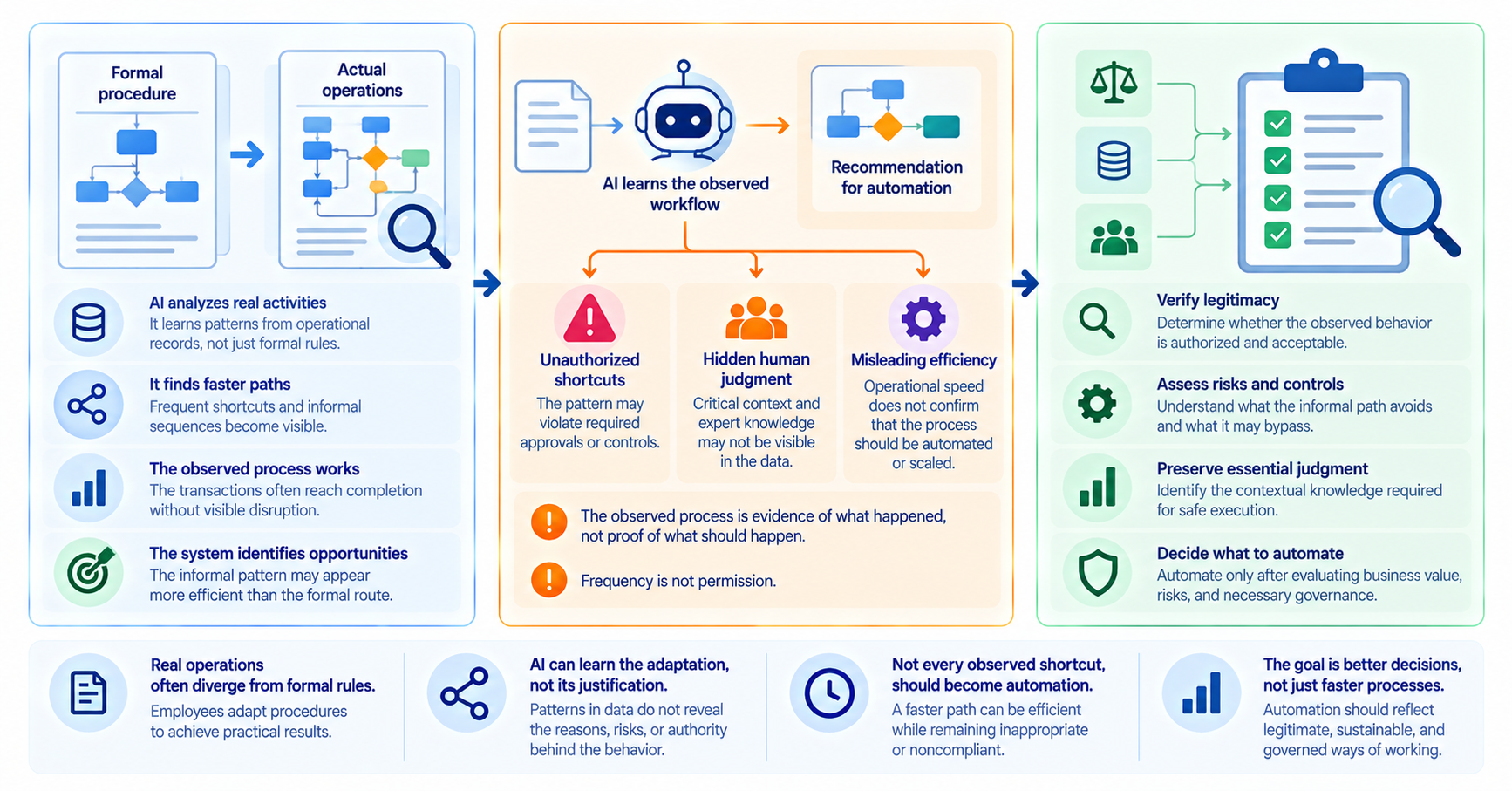
The Process AI Learns May Be the One You Need to Change
AI can reconstruct how an organization actually operates, revealing workflows that differ from formal procedures. But accurately learning existing behavior does not establish that the behavior should be automated, preserved, or scaled. The Shortcut That Looks Like a Successful Process Consider an enterprise procurement operation where employees regularly need urgent purchases approved faster than the…
-
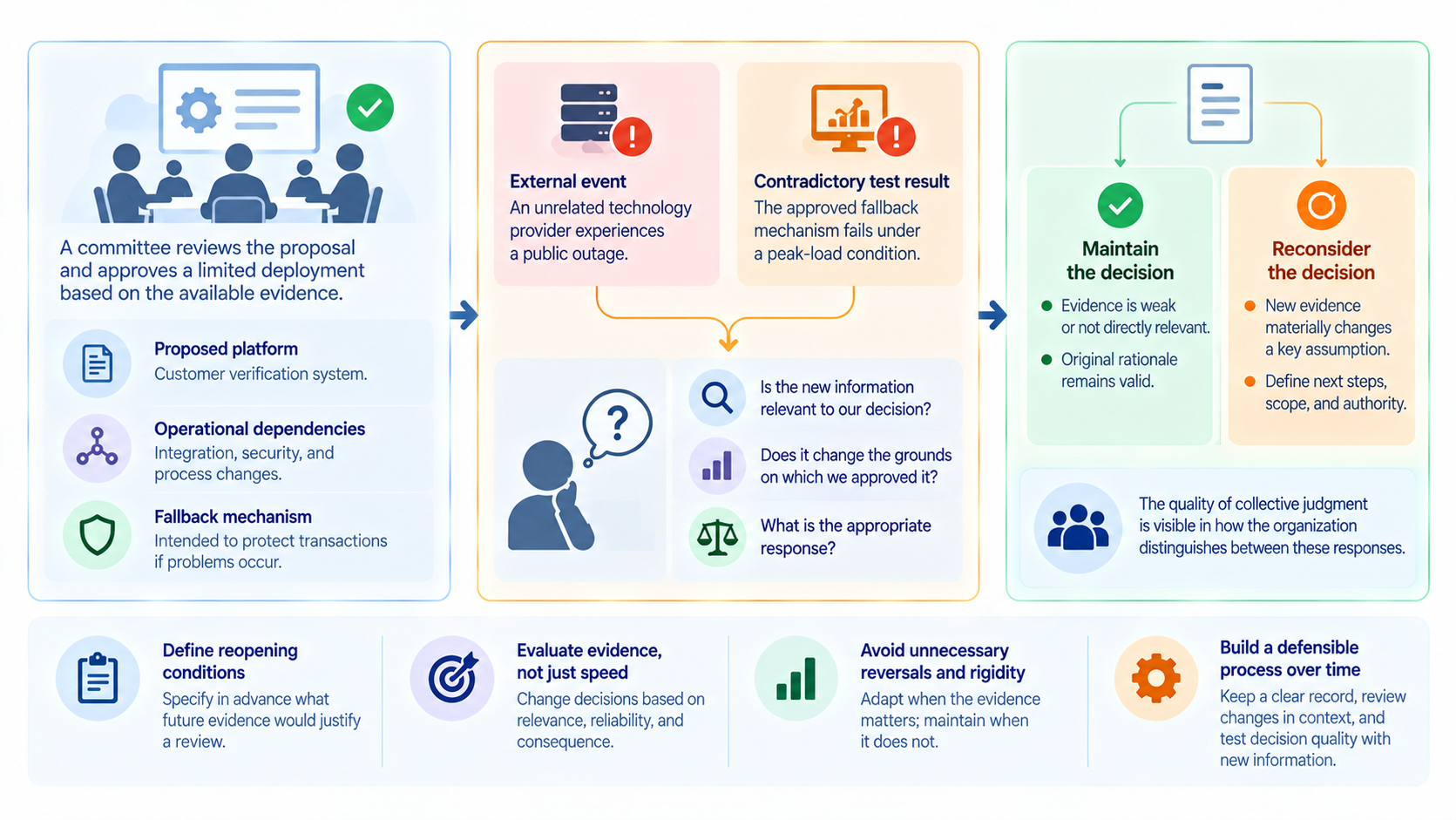
When Should a Wise Organization Change Its Mind?
Organizations often celebrate leaders who make confident decisions and teams that adapt quickly. Yet neither consistency nor flexibility guarantees good judgment. The harder capability is knowing when new evidence genuinely justifies changing a decision, and when it does not. The Decision After the Decision Imagine a hypothetical financial services company preparing to deploy a new…
-
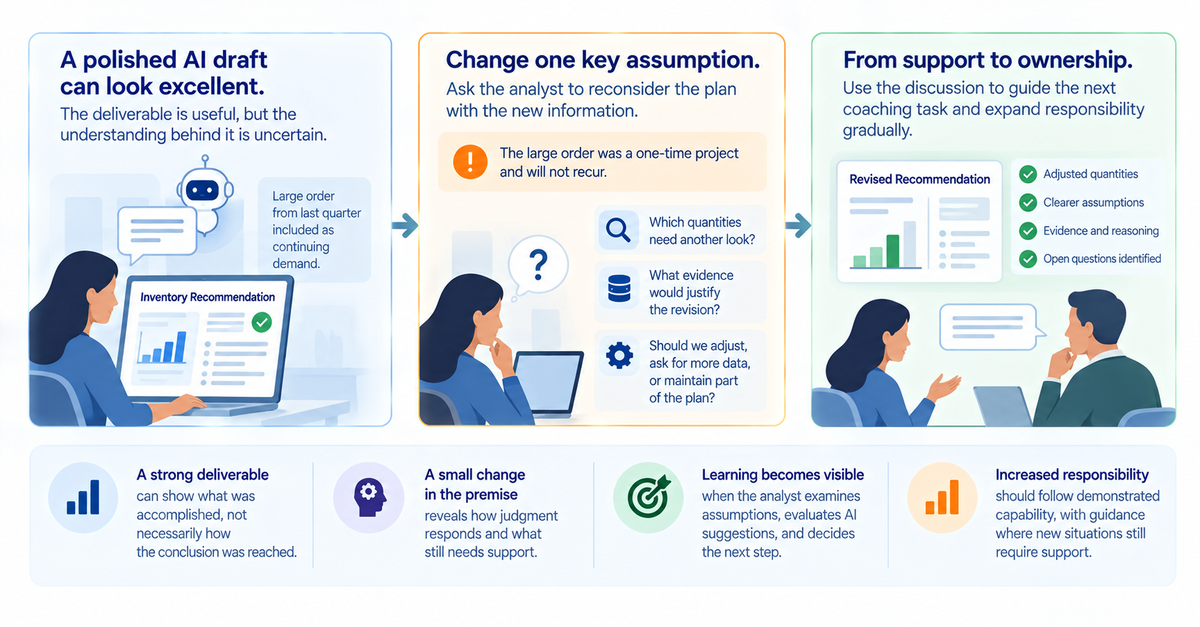
A Polished Draft Can Hide a Learning Gap
An excellent deliverable can show what an employee accomplished with AI while leaving their understanding uncertain. Employee development needs opportunities to see how judgment holds up when the situation changes. When the Deliverable Stops Revealing the Method Consider a hypothetical analyst using AI to prepare an inventory replenishment recommendation. The document explains recent demand and…
-
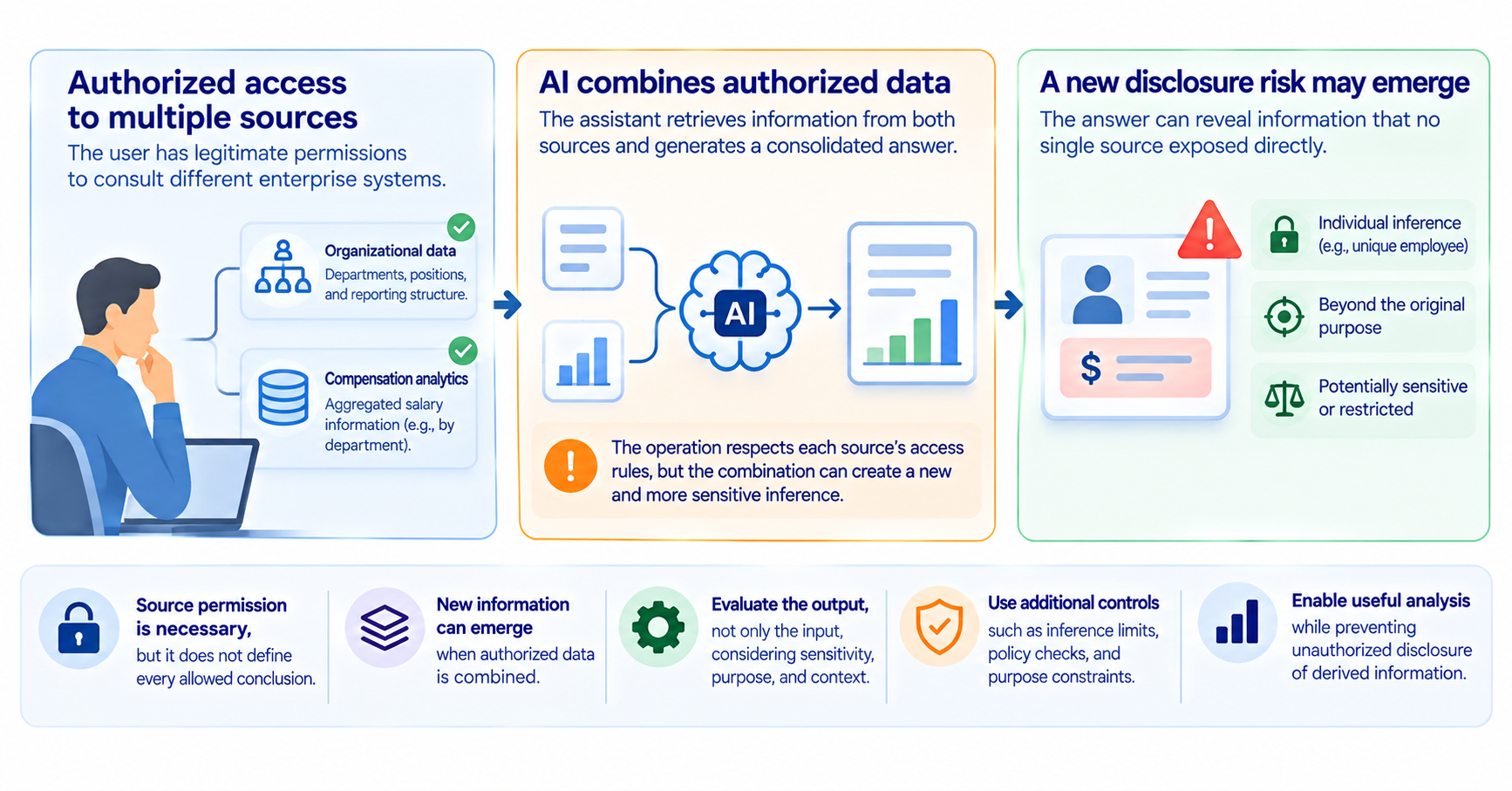
When Authorized Data Produces an Unauthorized Answer
Enterprise AI can respect the access permissions of every source it consults and still produce information that requires additional protection. The challenge begins when individually authorized facts are combined into conclusions whose sensitivity was never evaluated by the original systems. The Answer That Neither Source Explicitly Revealed Consider an enterprise assistant connected to two corporate…
-
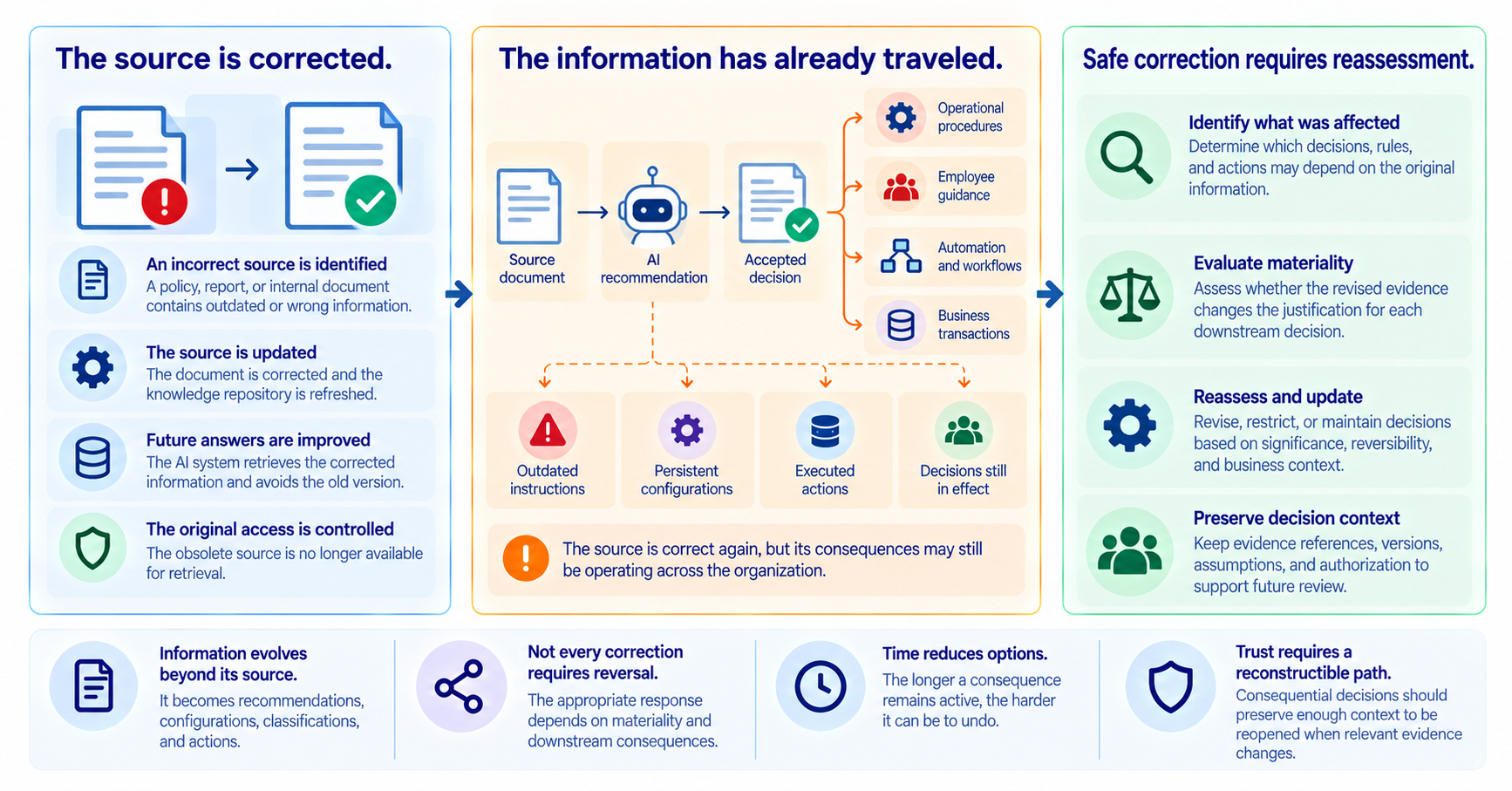
Correcting the Source Does Not Correct Its Consequences
An AI system can stop using incorrect information while the decisions influenced by that information continue to operate elsewhere. Correcting knowledge and correcting its consequences are different architectural responsibilities. The Error Has Already Left the Document An enterprise AI assistant retrieves an internal policy document and produces a recommendation. The recommendation is reviewed, accepted, and…
-
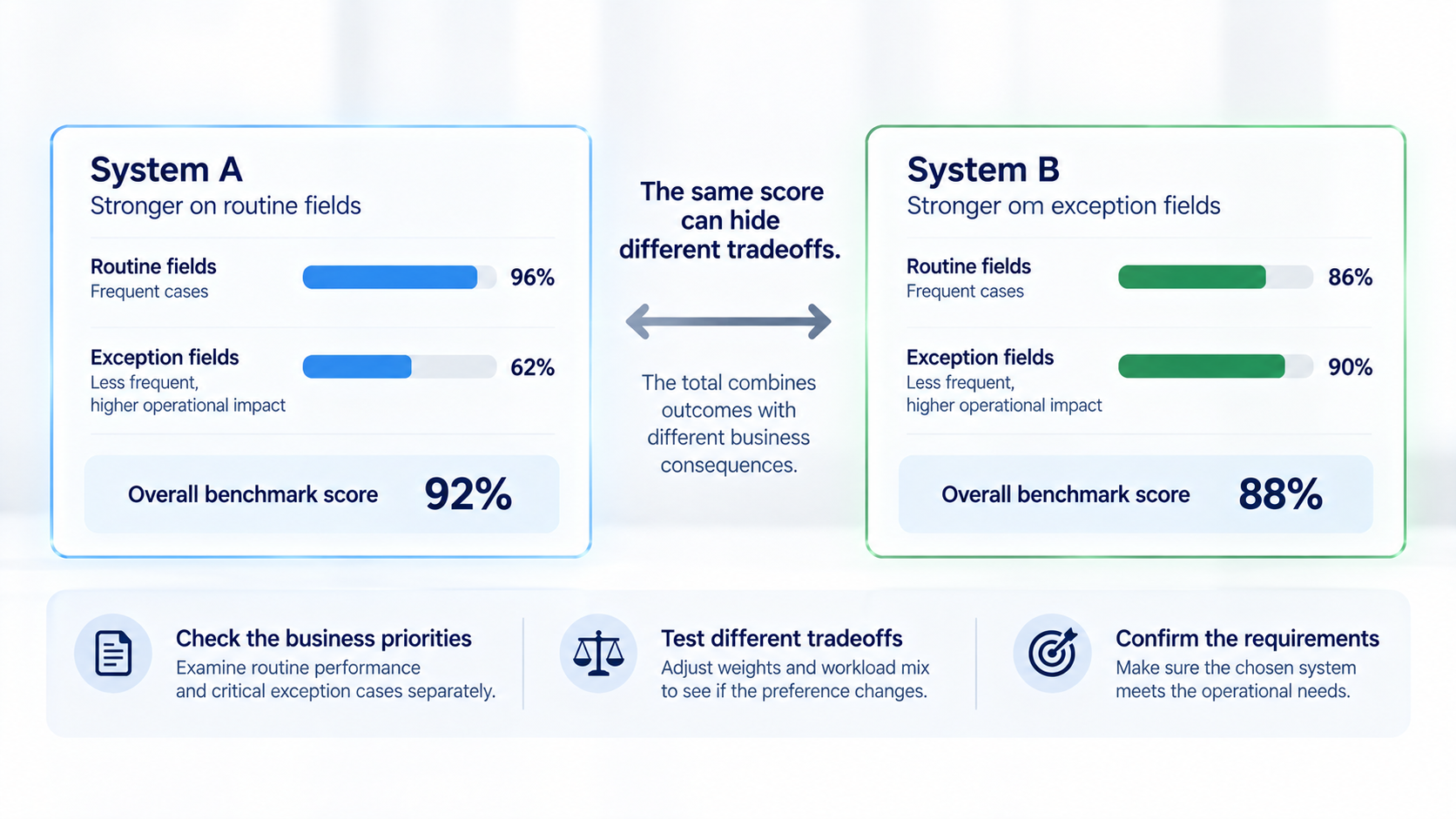
The Tradeoffs a Benchmark Score Can Hide
An overall result can conceal where performance improves and where it deteriorates. Evaluation becomes more useful when business priorities remain visible alongside the score. What the total combines Imagine two AI systems extracting information from shipment records. Most fields are routine identifiers, while a smaller subset describes exceptions that change how a shipment should be…
-
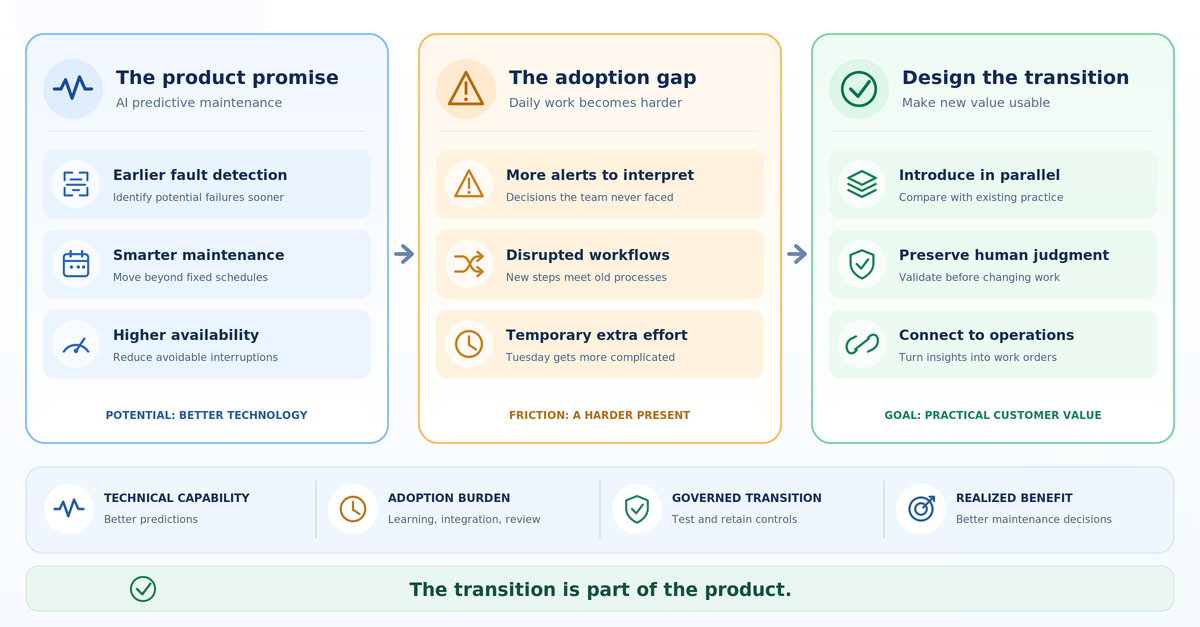
The Better Product That Made Tuesday Worse
Innovation often promises a better future while requiring customers to endure a more difficult present. For companies developing AI-enabled products and services, competitive advantage may depend not only on the value of the innovation itself, but also on how effectively they help customers cross the distance between their existing operations and the new possibilities. When…
-
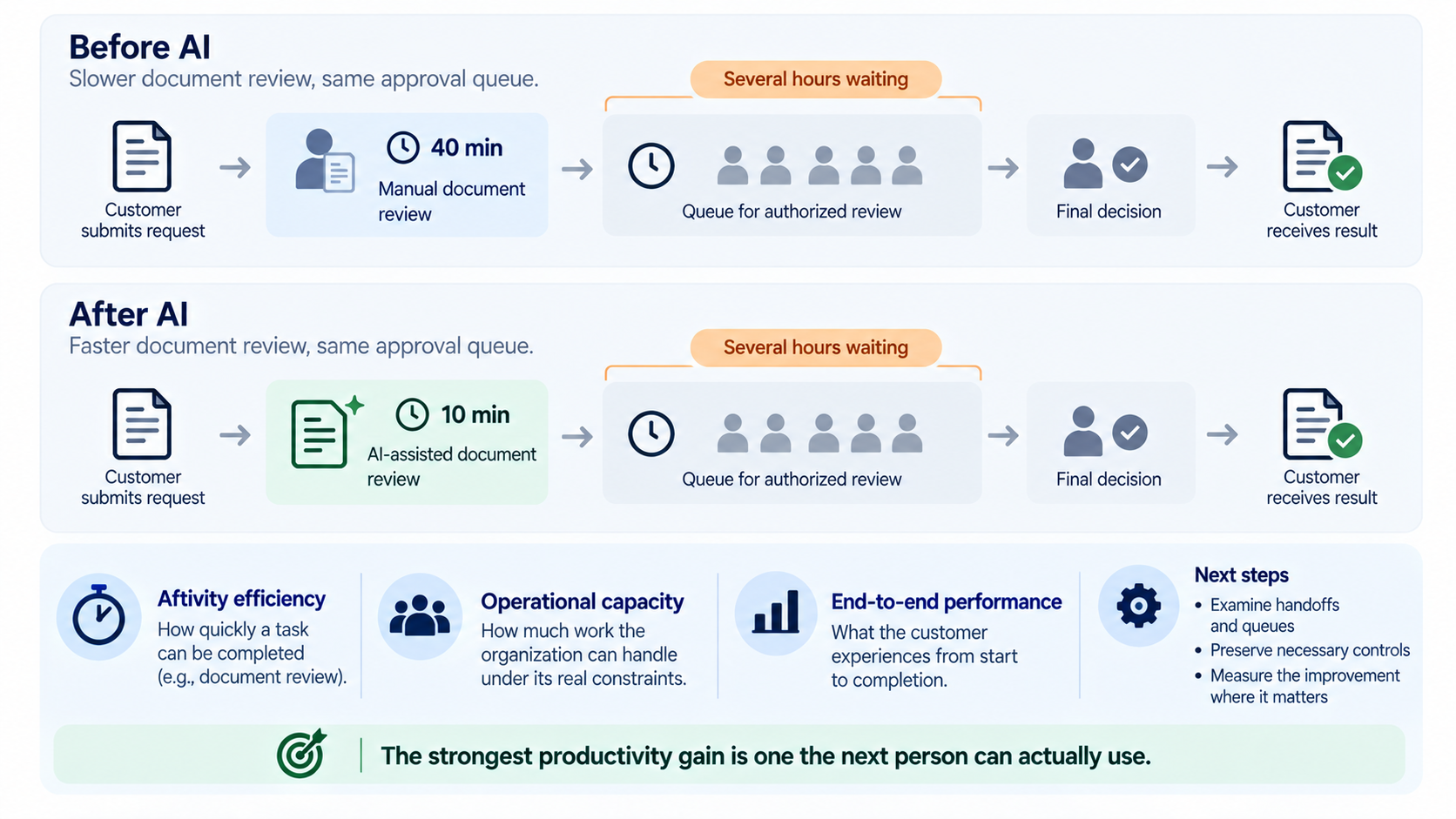
The Queue After the Shortcut
Automation can make individual activities significantly faster without reducing the time required to deliver a complete service. The strategic value of productivity improvements depends on whether the time saved can travel through the processes, decisions, and responsibilities that follow. A Faster Review, the Same Customer Wait Consider a hypothetical insurance company introducing AI to accelerate…
-
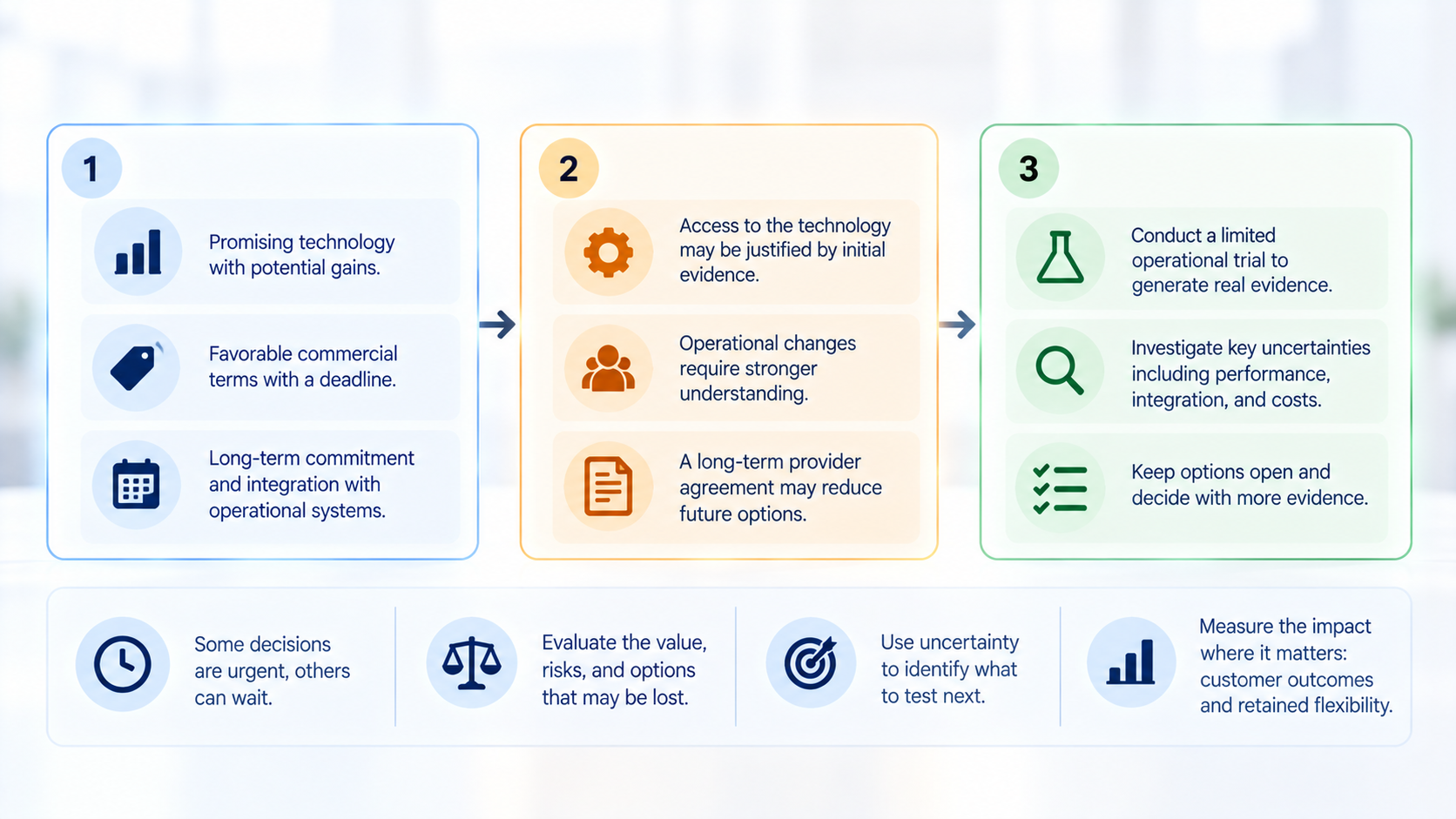
The Decision That Could Wait
Wisdom in business is not simply the ability to make better decisions with more information. It is also the ability to recognize which decisions must be made now, which commitments should remain reversible, and when preserving a choice is more valuable than exercising it. When an Opportunity Comes With a Deadline Consider a hypothetical logistics…
-
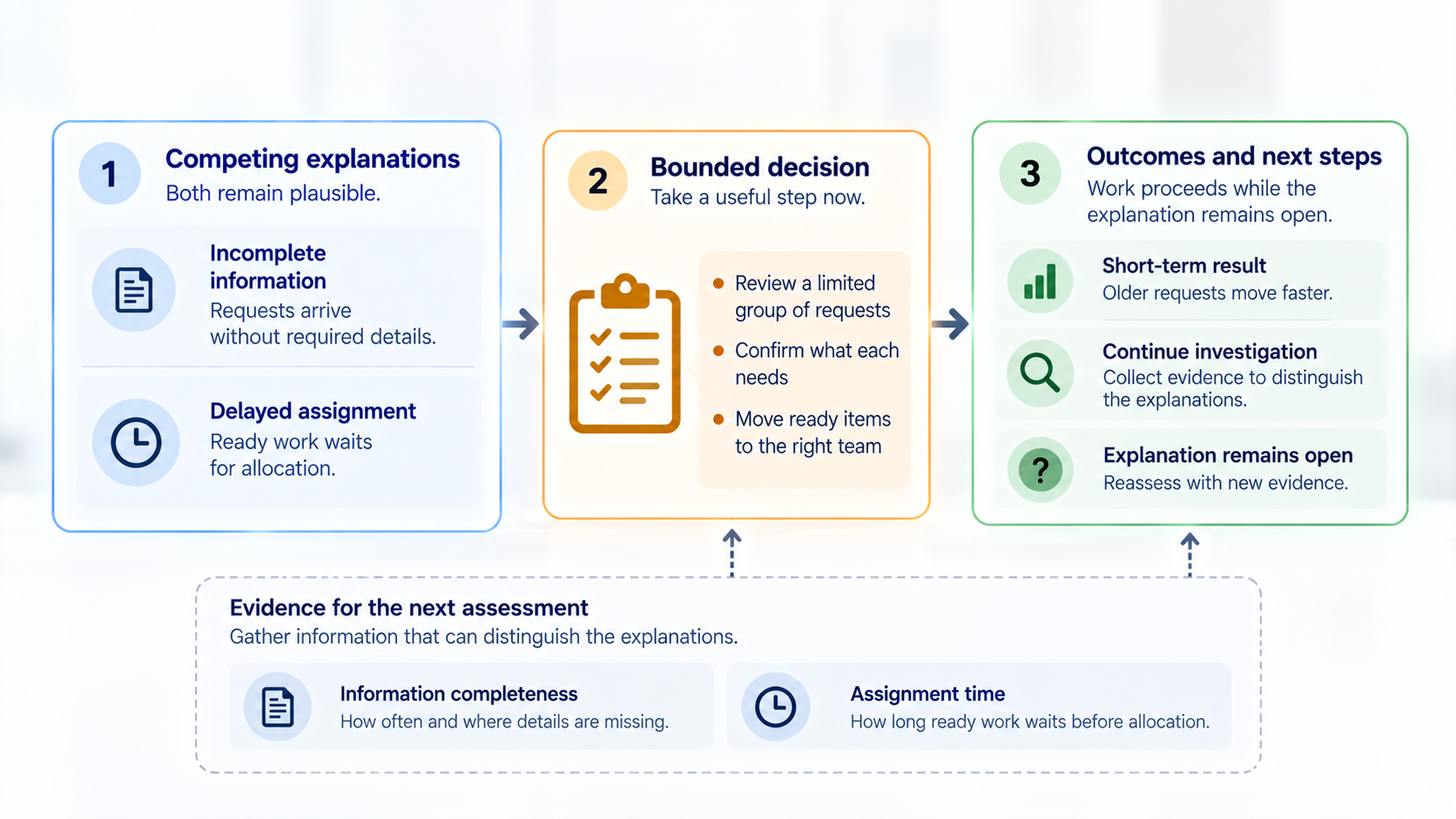
A Decision Can Move While the Explanation Stays Open
A team can lack sufficient evidence to settle a cause while still having grounds for a limited action. Keeping those questions separate allows useful work to proceed without presenting an open explanation as a resolved fact. Separate the choice from the explanation Imagine an AI-assisted review of delays in an internal service queue. It preserves…
-
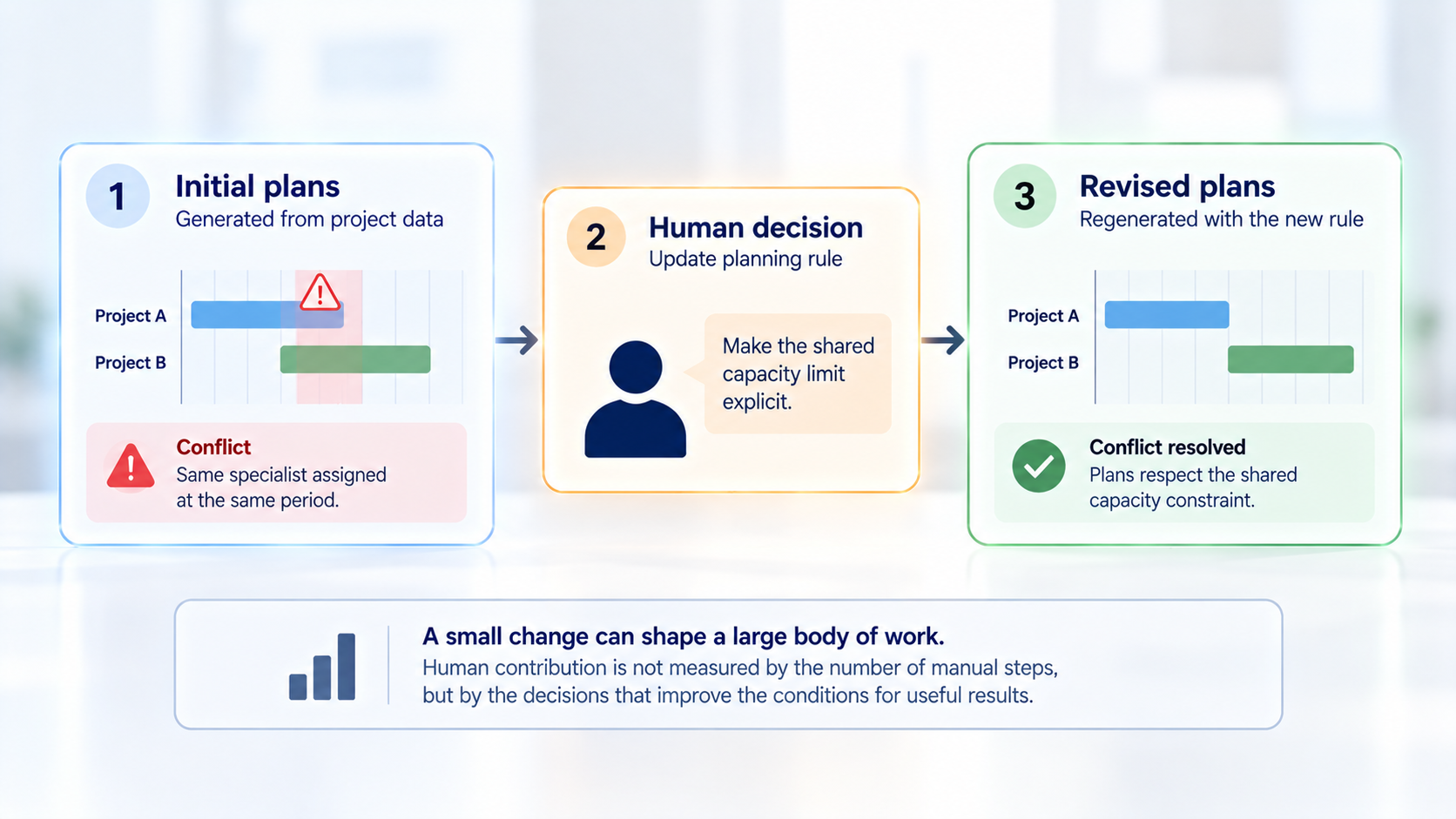
Human Contribution Beyond Manual Execution
When AI performs the visible steps, human contribution can become harder to recognize. A useful account connects a person’s decisions to the outcomes they helped shape. An activity record can miss the decisive choice Imagine a team using AI to prepare delivery plans from project data. A planner notices that two projects each assume they…
-
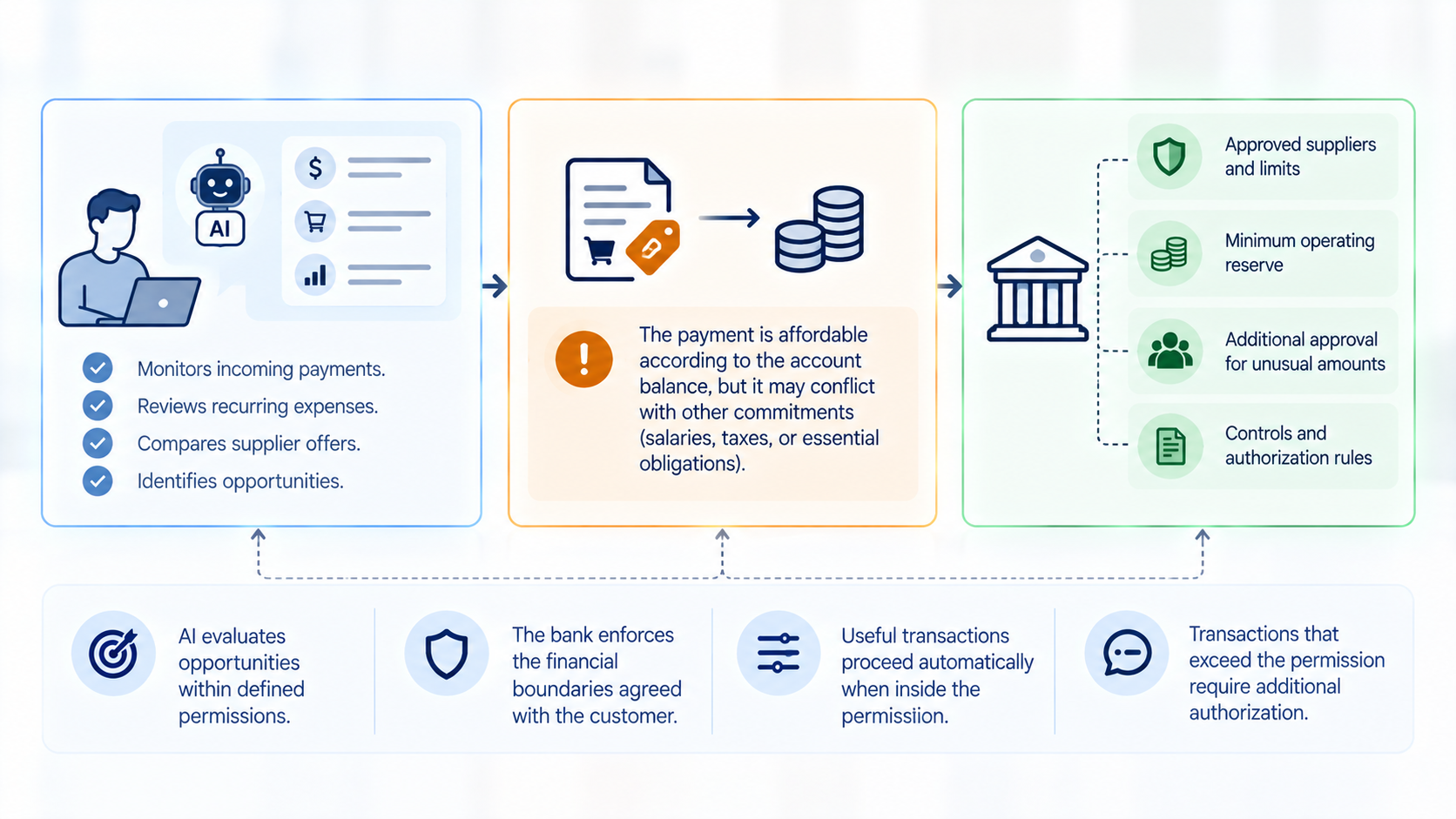
Banking After the Button
The future of banking may be shaped less by how easily customers can initiate transactions and more by how intelligently financial institutions protect the decisions made on their behalf. As AI agents begin to manage financial activities, banks face a new responsibility: preserving customer intention, authority, and trust when financial actions no longer require direct…
-
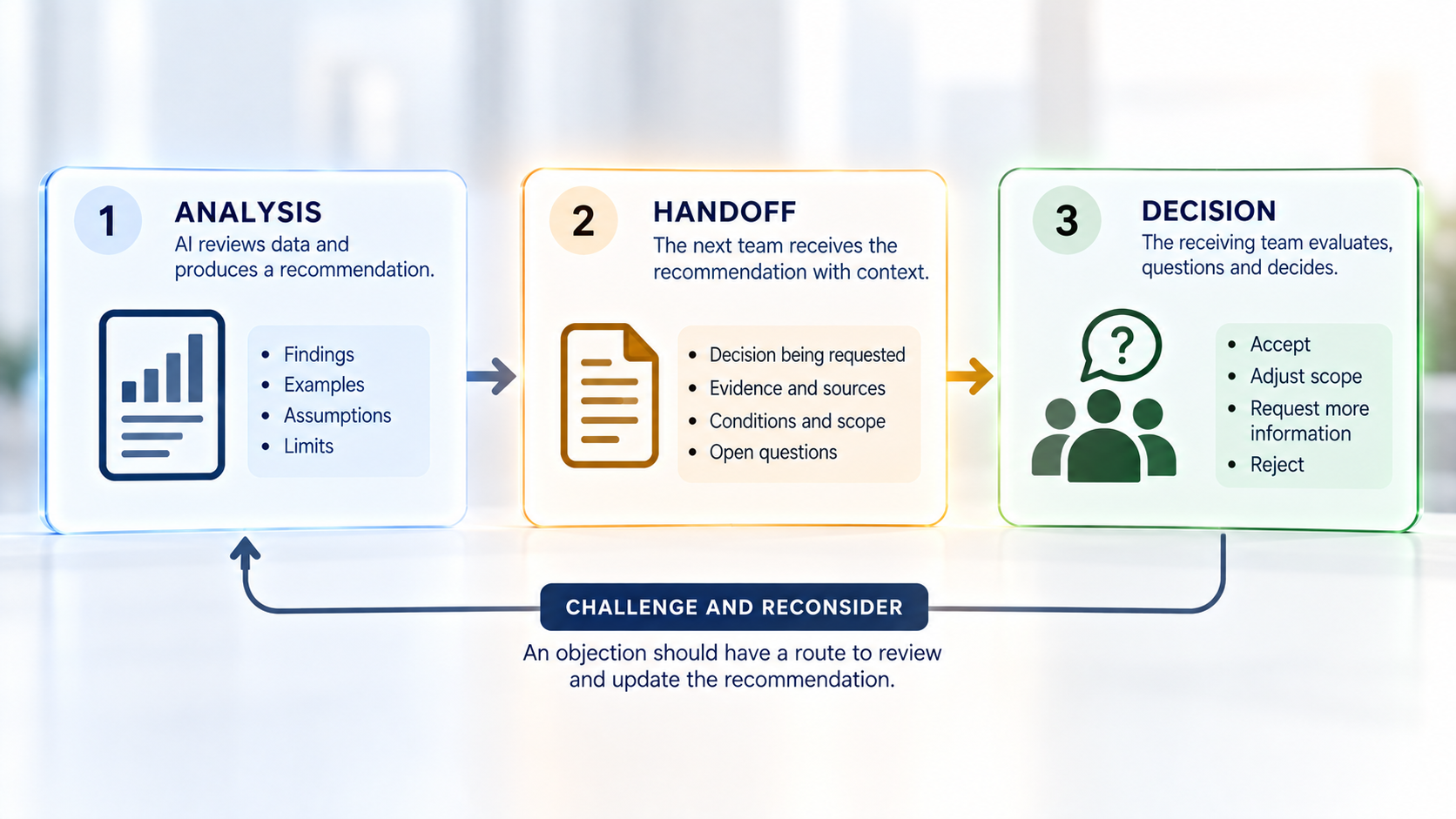
A Recommendation Must Remain Open to Challenge
An AI recommendation can reach another team with its conclusion intact and its assumptions missing. A useful handoff preserves enough evidence, scope, and ownership for the next decision maker to question it. What disappears between teams Imagine an AI-assisted review recommending that a business combine two customer-support queues. The analysis identifies similar ticket categories, overlapping…
-
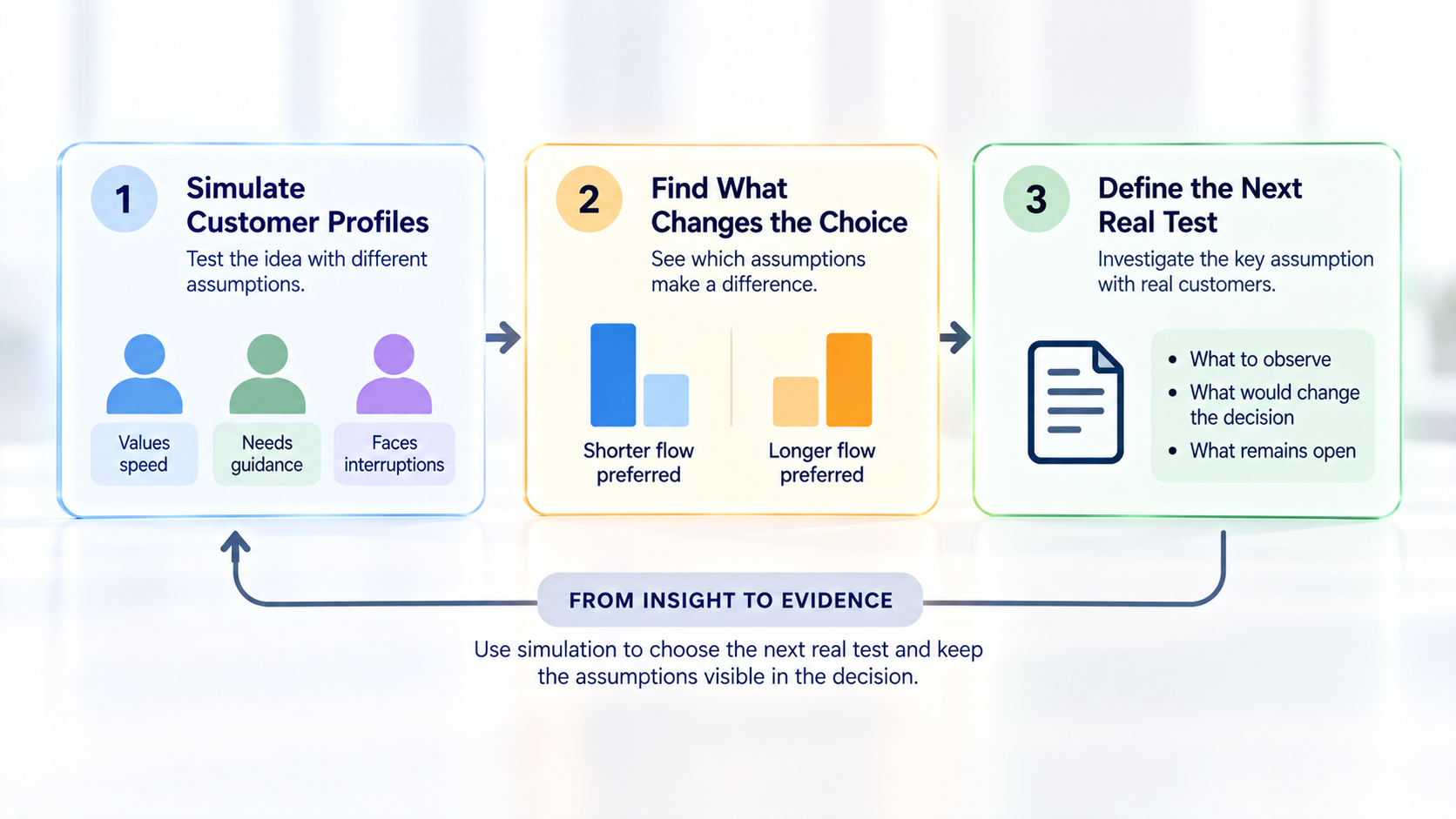
Use Synthetic Customers to Find the Next Real Test
Simulated responses can reveal which customer assumptions deserve attention. Their business value depends on turning that exploration into a question that evidence from real customers can help resolve. The customer is part of the hypothesis Imagine a team considering a shorter onboarding flow for a digital service. The proposed design removes explanatory steps so people…
-
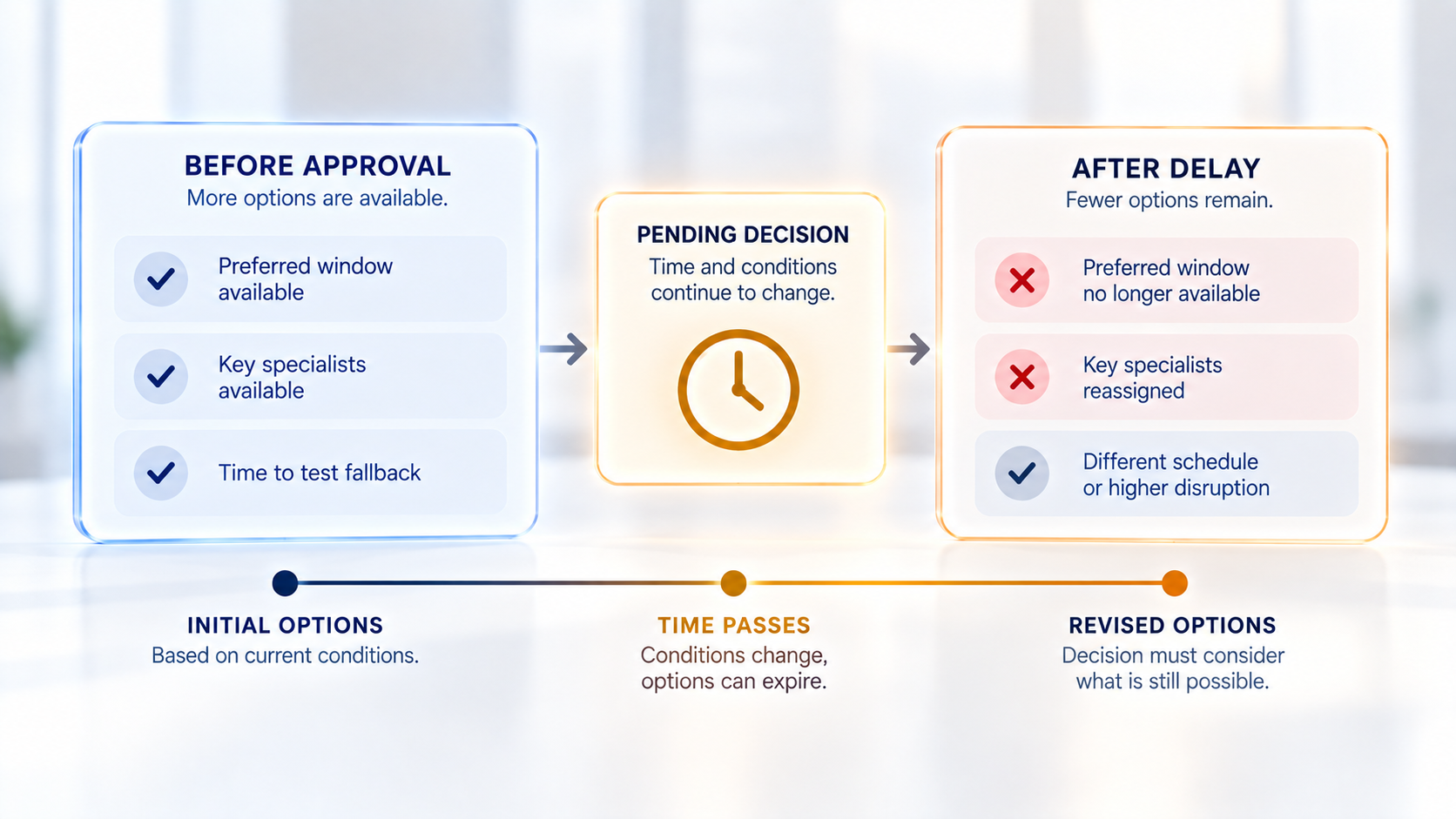
Waiting Can Change What Is Still Possible
A pending decision can lose options as conditions change. Useful deliberation considers both the information waiting may provide and the alternatives it may remove. The calendar can alter the choice Imagine an operations team preparing a system migration. The proposed schedule includes a suitable maintenance window, available specialists, and enough time to test a fallback.…
-
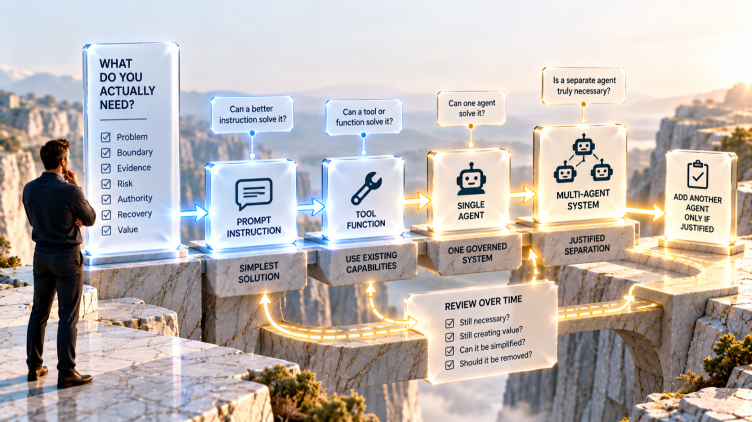
Before You Add Another AI Agent, Prove You Need One
Before building a team of AI agents, there is a more fundamental architecture question: why should the second agent exist at all? Another capability does not automatically require another autonomous boundary. The same work may belong in a tool, function, instruction, workflow node, or internal role. The stronger test is whether separation preserves something a…
-
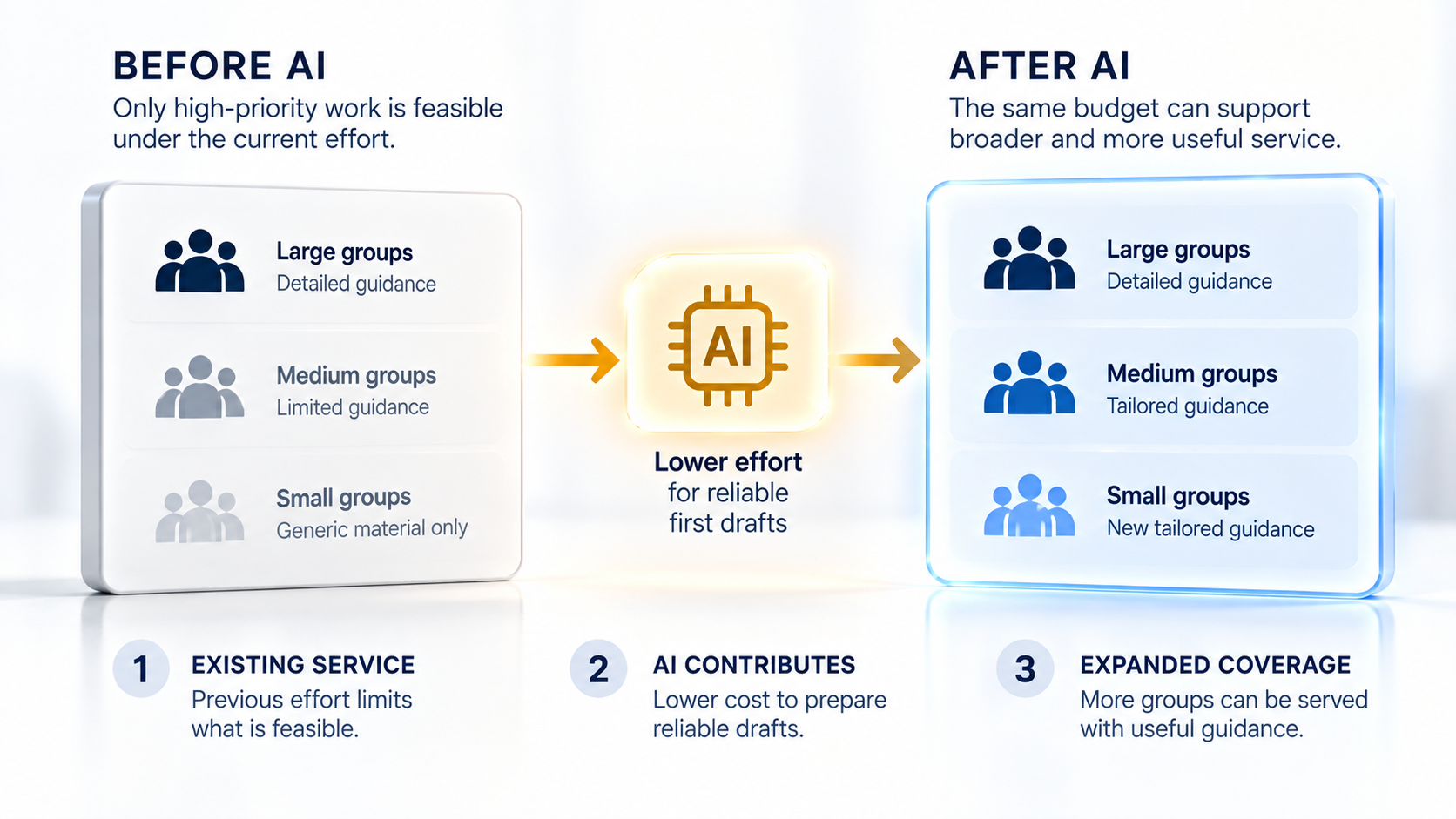
The Work That Becomes Worth Doing
Lowering the effort behind a task can change which work an organization is willing to undertake. AI value can therefore appear as wider service or better coverage, even when total spending stays unchanged. A lower cost can change the service itself Imagine an organization that prepares detailed onboarding guidance only for its largest employee groups.…
-
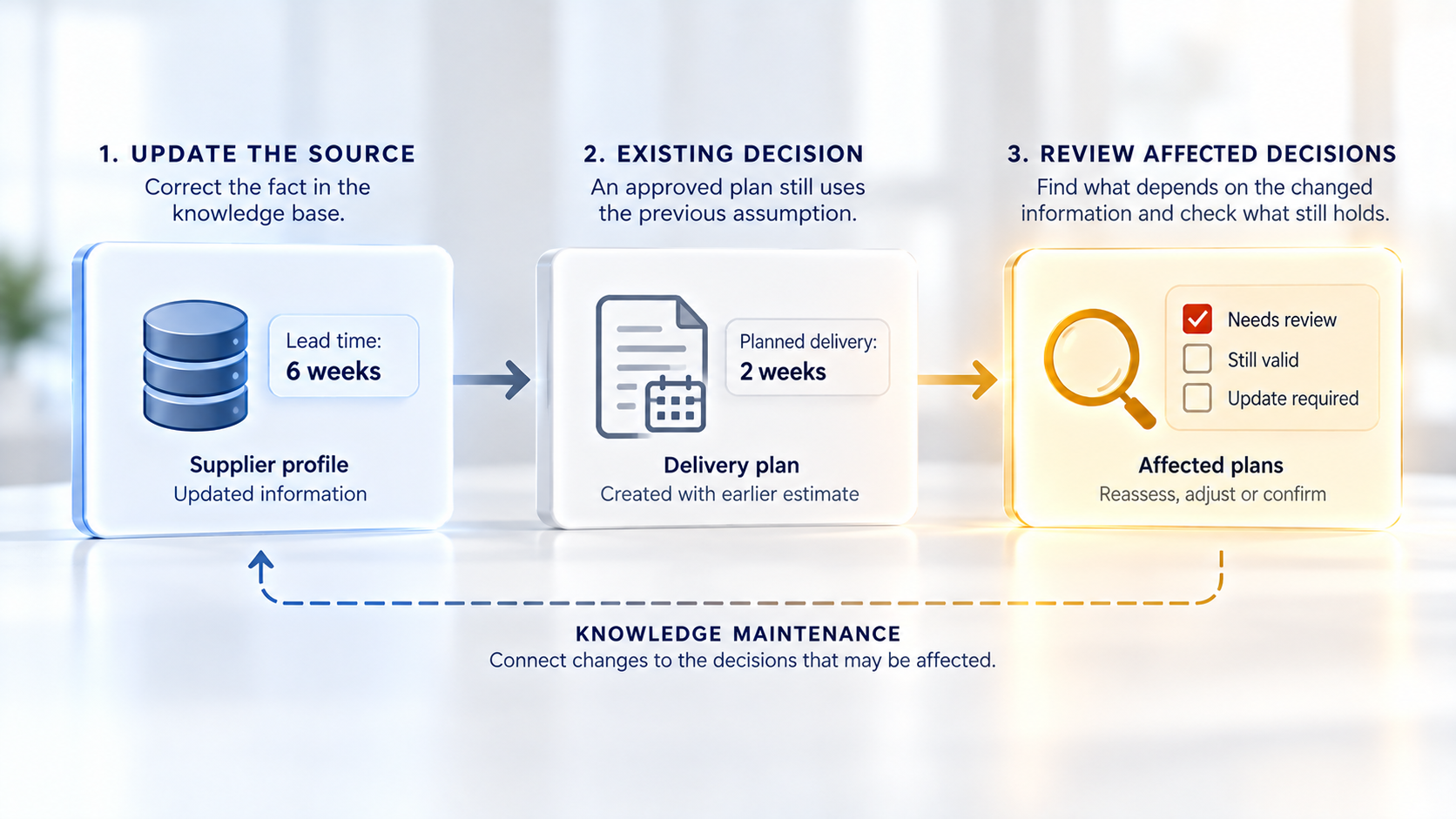
Updating the Source Leaves Another Job to Do
Correcting a fact can leave the recommendations built from it untouched. Knowledge maintenance needs a route for finding which conclusions depend on information that has changed. A current source can leave an older plan in place Suppose a supplier announces a longer delivery lead time. The organization updates the supplier’s profile, and subsequent searches return…
-
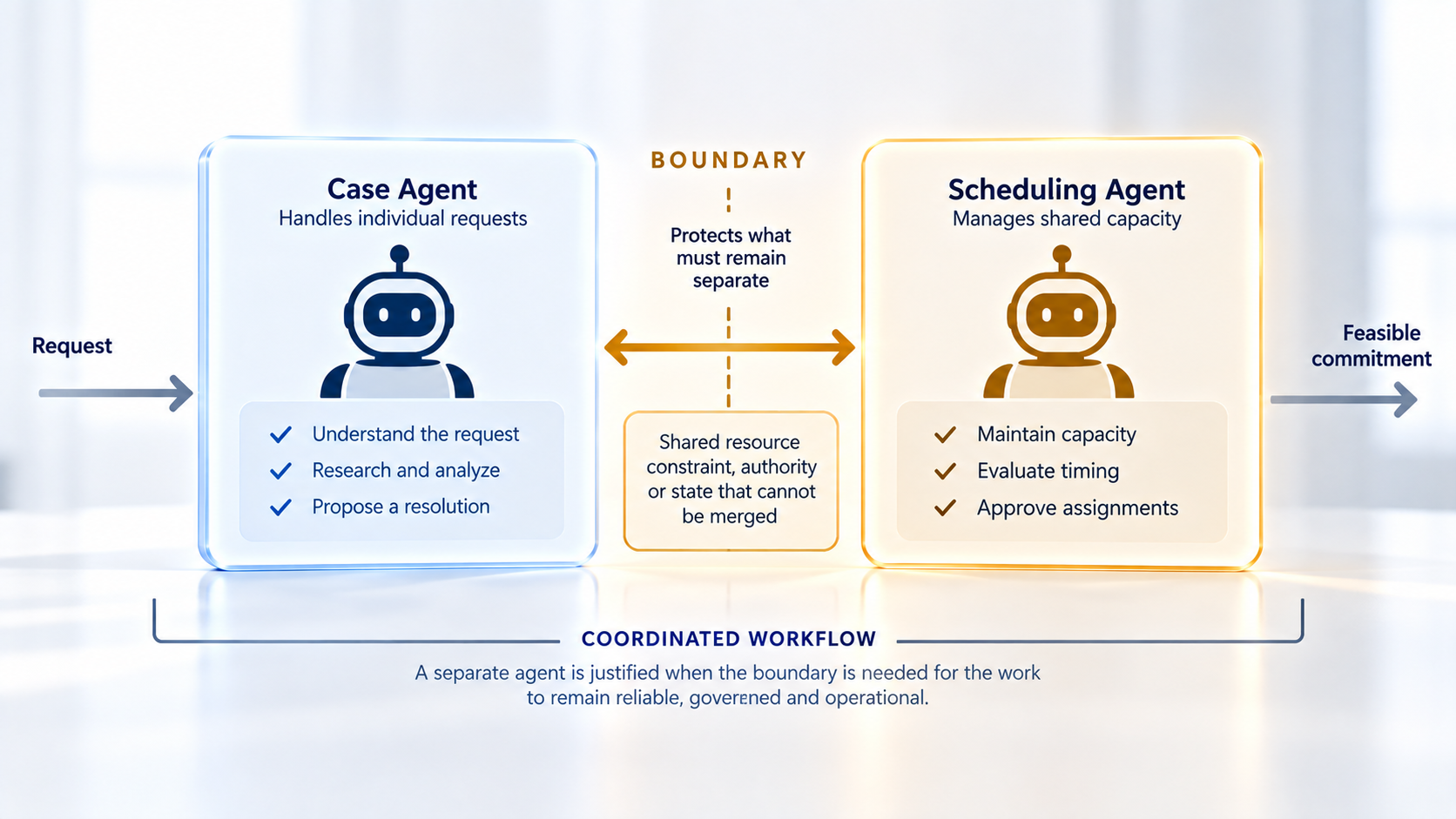
Before Adding Another Agent, Name the Boundary
Dividing work into roles leaves an architectural choice open. A separate agent earns its place when it preserves a needed boundary that a simpler arrangement cannot adequately protect. A new role leaves the architecture undecided An AI workflow might include planning, research, review, and communication. These roles help explain how the work should progress. They…