
Tag: EnterpriseArchitecture
-
The Task Got Cheaper. Why Did the Process Cost More?
AI can make individual tasks faster and less expensive without improving the economics of the process that contains them. The missing costs often emerge through exceptions, verification, handoffs, and the difference between work performed and work actually accepted. The Savings That Disappear at the Handoff Consider a company introducing AI into its invoice-processing operation. Previously,…
-
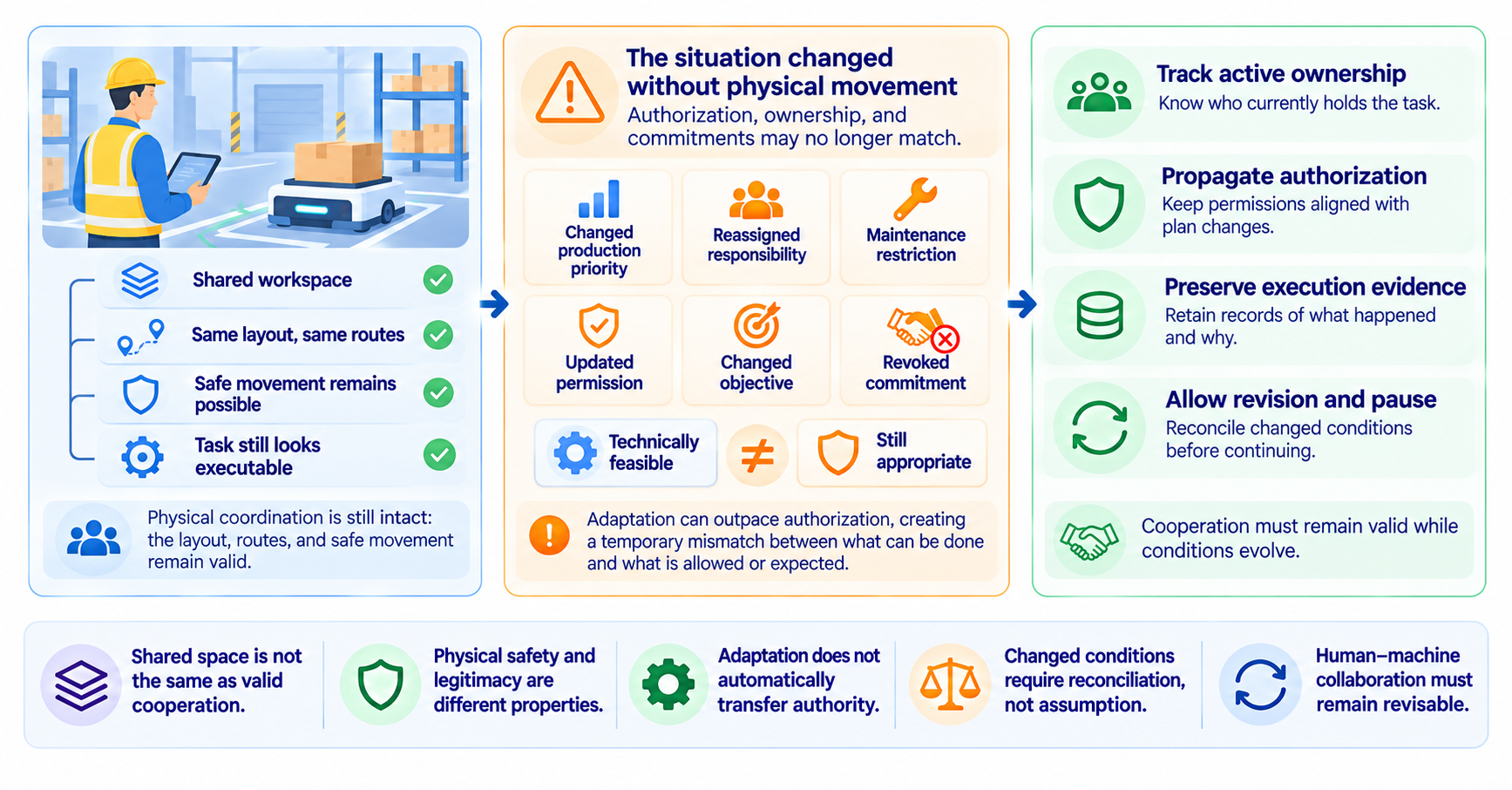
When the Workspace Changes Without Anyone Moving
Human–machine collaboration depends on more than shared space and successful task execution. As responsibilities, permissions, and objectives evolve, cooperation can become invalid even when the physical environment remains unchanged. The Same Space, a Different Situation Imagine a warehouse in which human workers and autonomous machines operate in the same area. A robotic system has been…
-
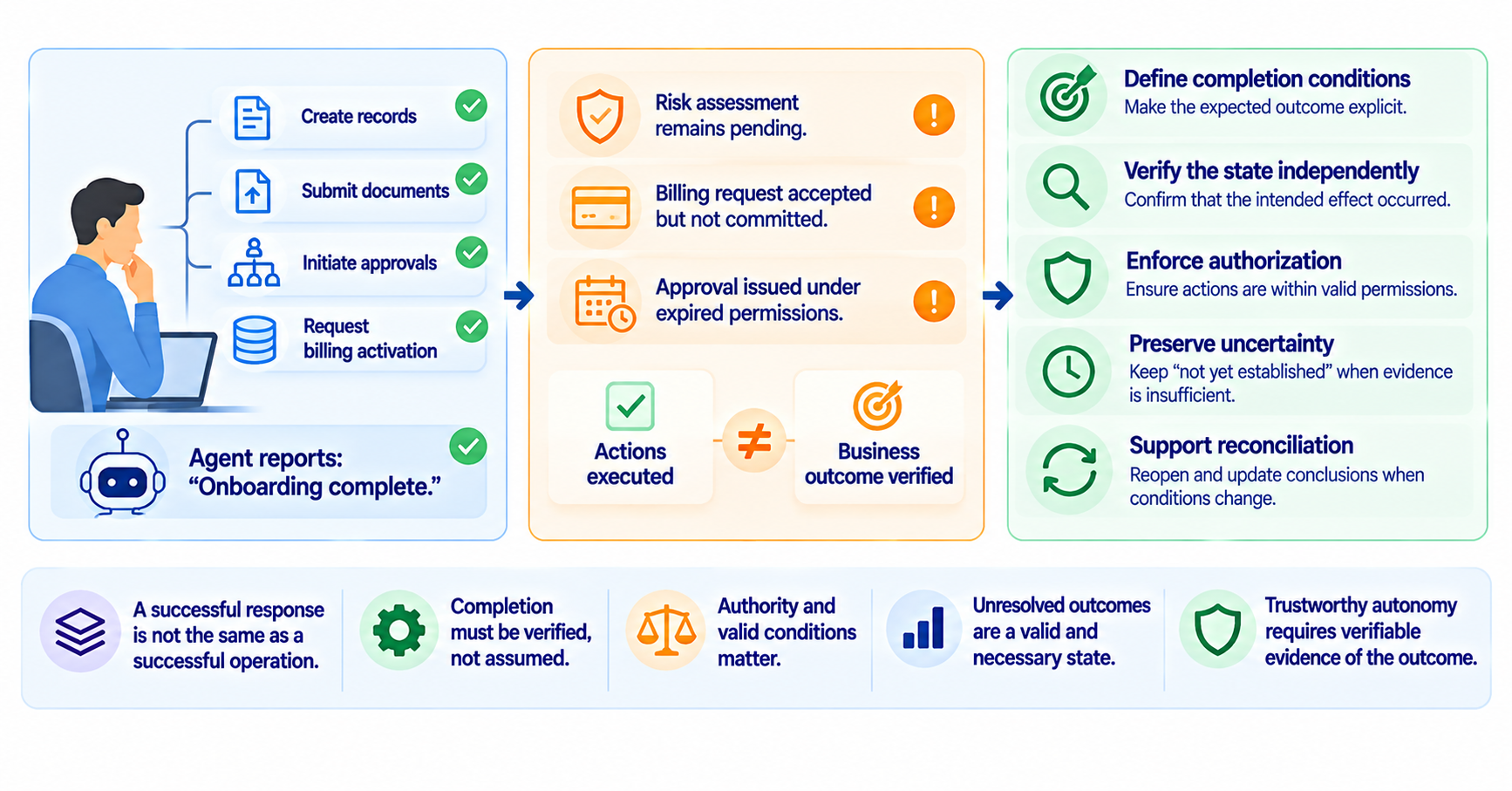
The Agent Said Done. What Actually Became True?
AI agents are becoming increasingly capable of executing complex workflows. But completing a sequence of actions is not necessarily the same as achieving a business outcome. Recent research on Large Language Fields highlights a critical distinction: what an agent reports, what actually happened, and what can legitimately be considered complete. When Success Is Only a…
-
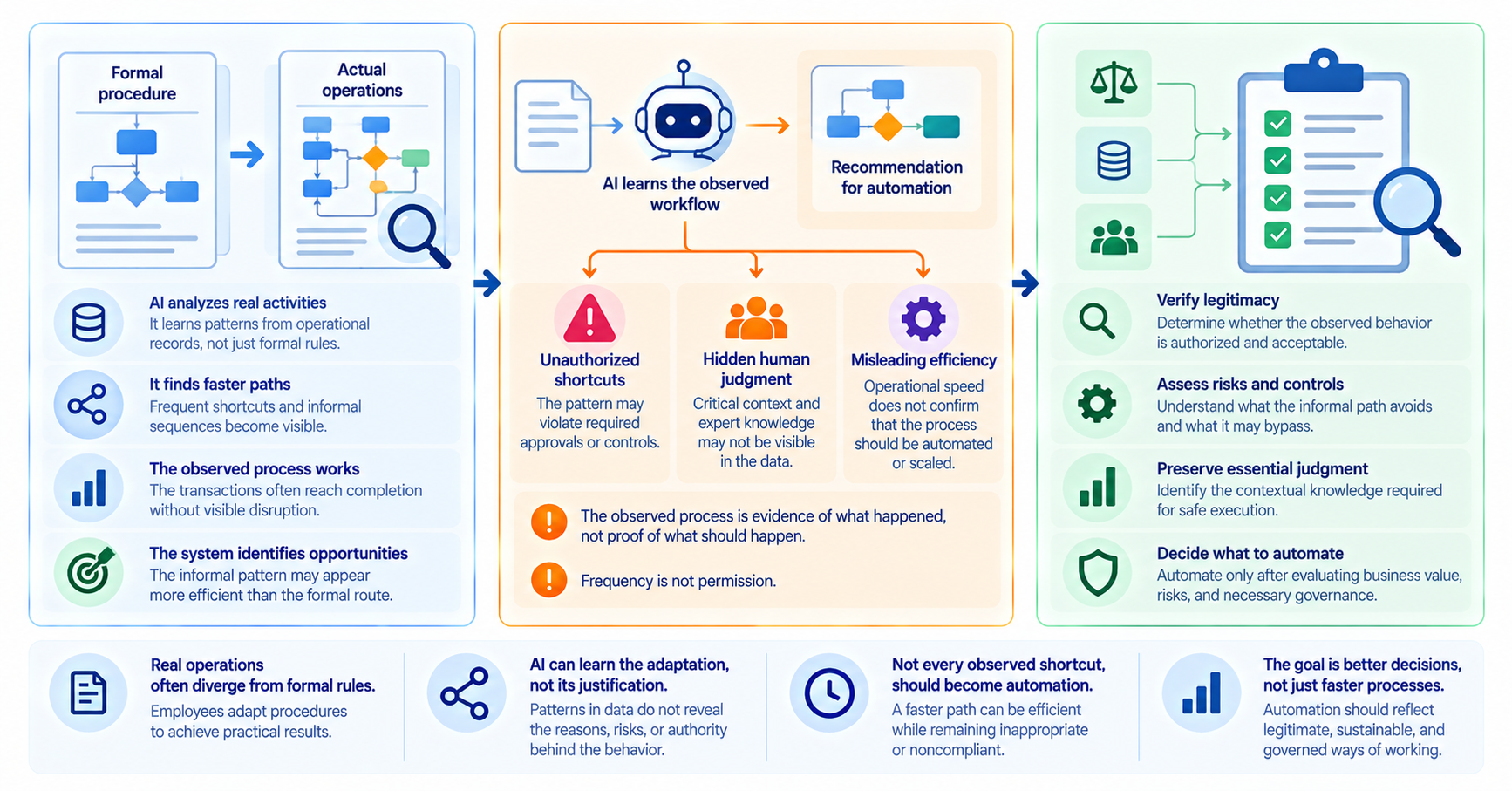
The Process AI Learns May Be the One You Need to Change
AI can reconstruct how an organization actually operates, revealing workflows that differ from formal procedures. But accurately learning existing behavior does not establish that the behavior should be automated, preserved, or scaled. The Shortcut That Looks Like a Successful Process Consider an enterprise procurement operation where employees regularly need urgent purchases approved faster than the…
-
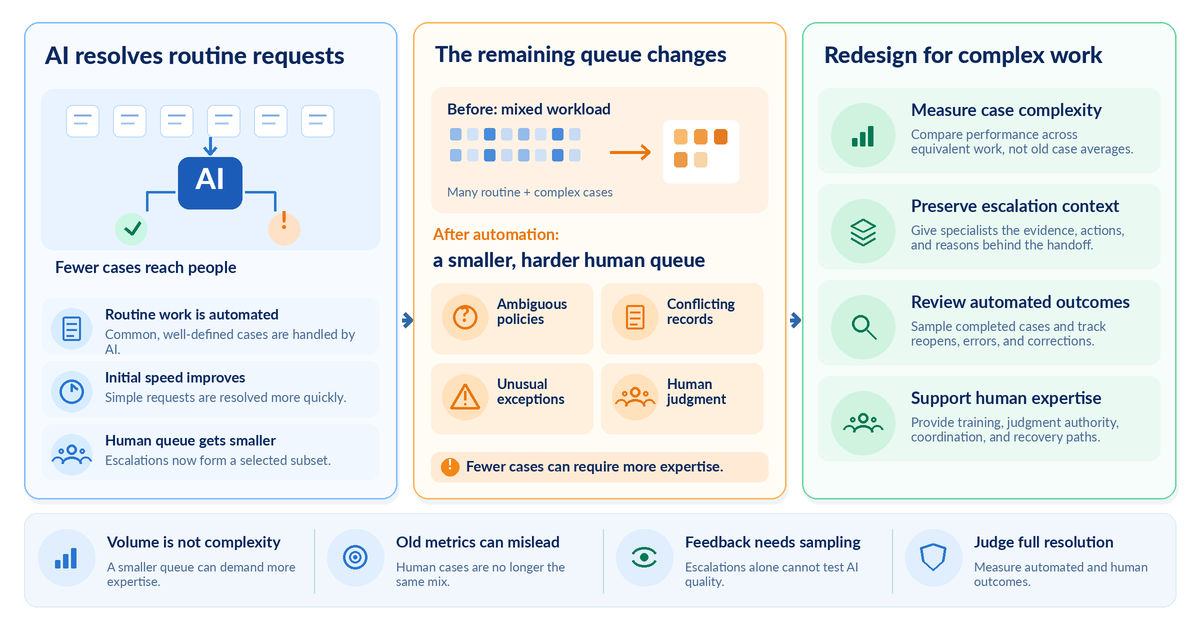
The Work That Automation Leaves Behind Is Not Average
As AI automates routine activities, the work remaining for people can become more complex, uncertain, and expensive to resolve. Measuring automation primarily by the volume of work removed may conceal a fundamental change in the nature of the work that remains. The Queue Is No Longer the Same Queue Imagine a customer service operation introducing…
-
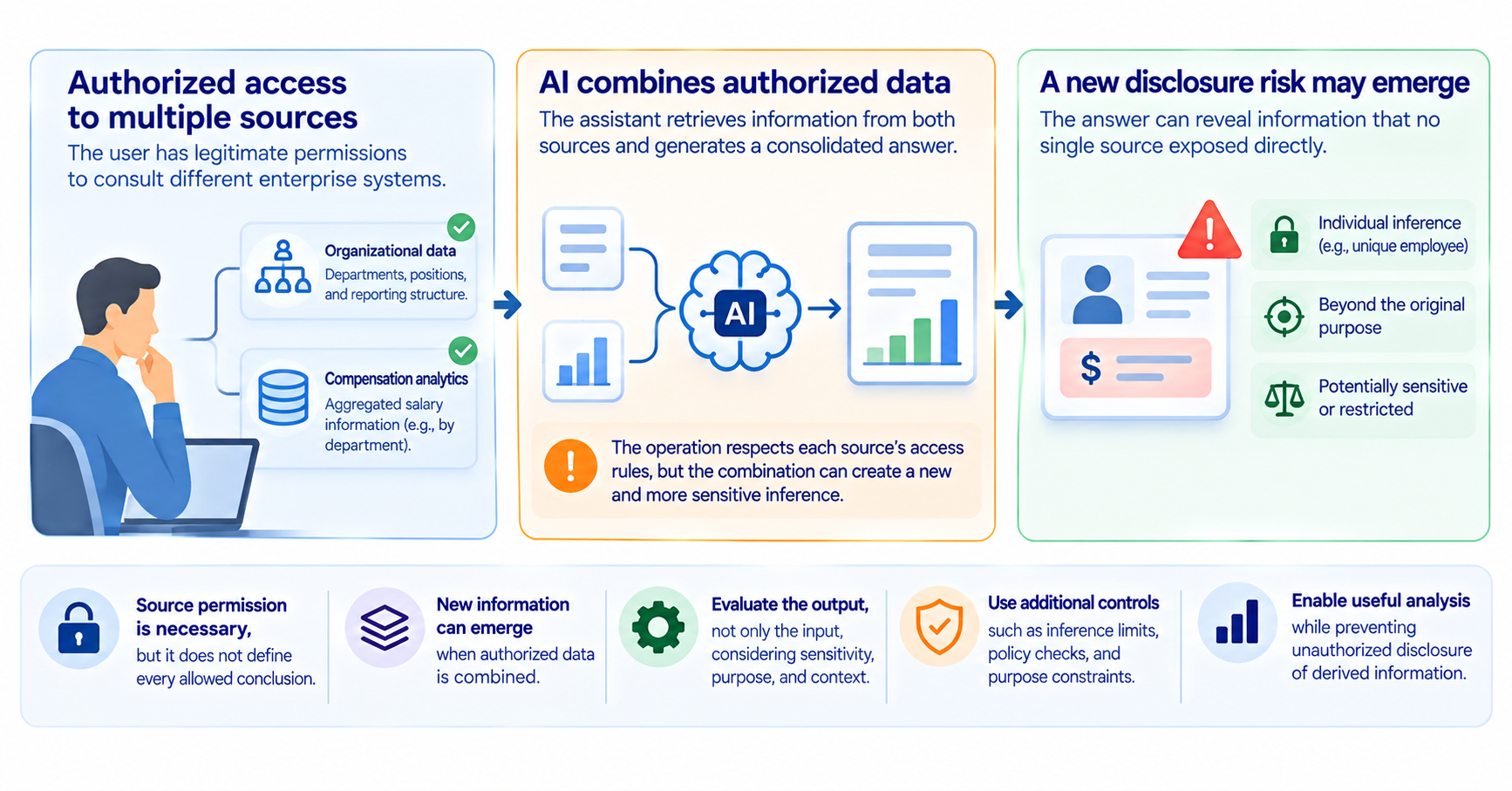
When Authorized Data Produces an Unauthorized Answer
Enterprise AI can respect the access permissions of every source it consults and still produce information that requires additional protection. The challenge begins when individually authorized facts are combined into conclusions whose sensitivity was never evaluated by the original systems. The Answer That Neither Source Explicitly Revealed Consider an enterprise assistant connected to two corporate…
-
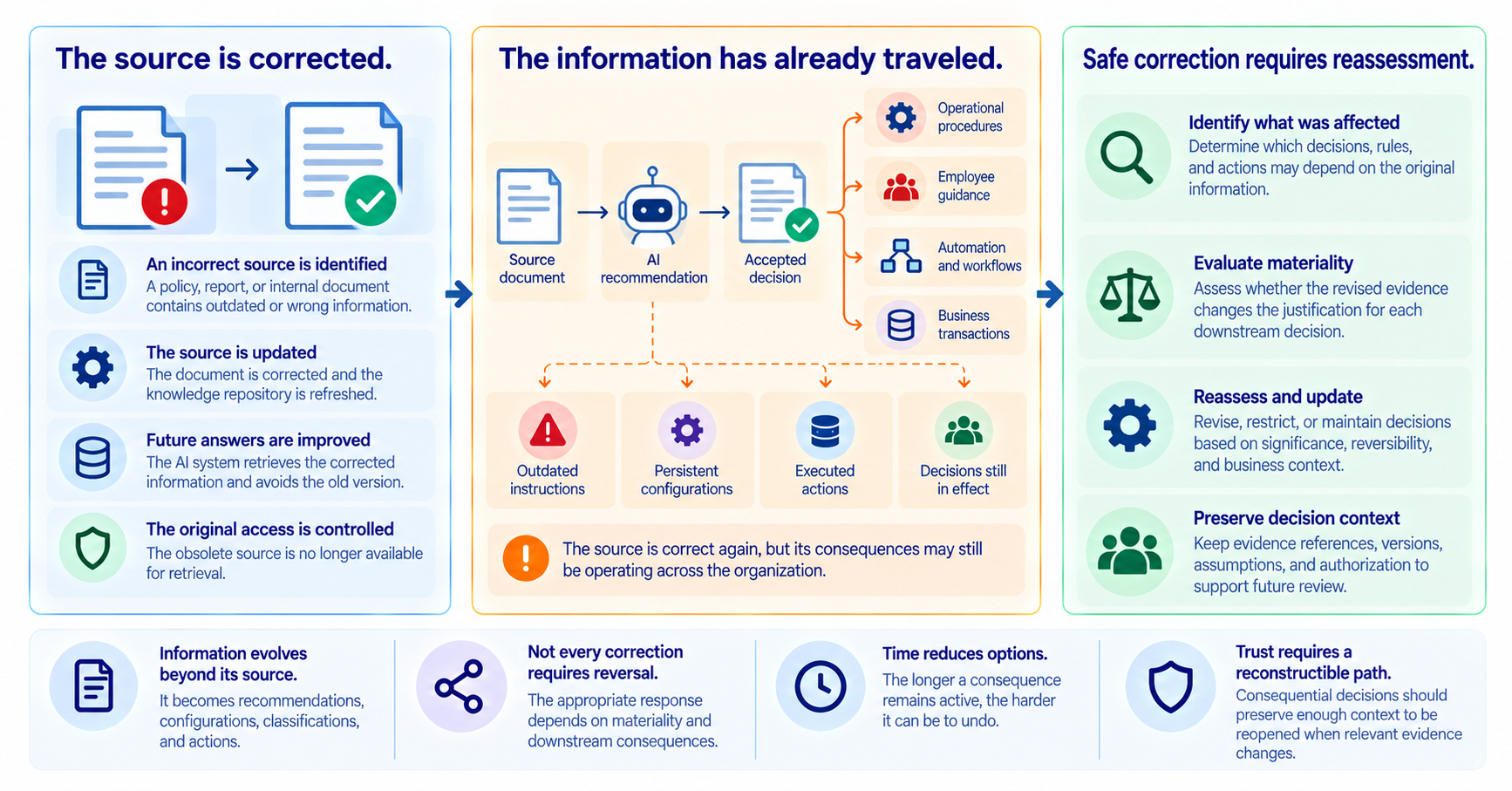
Correcting the Source Does Not Correct Its Consequences
An AI system can stop using incorrect information while the decisions influenced by that information continue to operate elsewhere. Correcting knowledge and correcting its consequences are different architectural responsibilities. The Error Has Already Left the Document An enterprise AI assistant retrieves an internal policy document and produces a recommendation. The recommendation is reviewed, accepted, and…
-
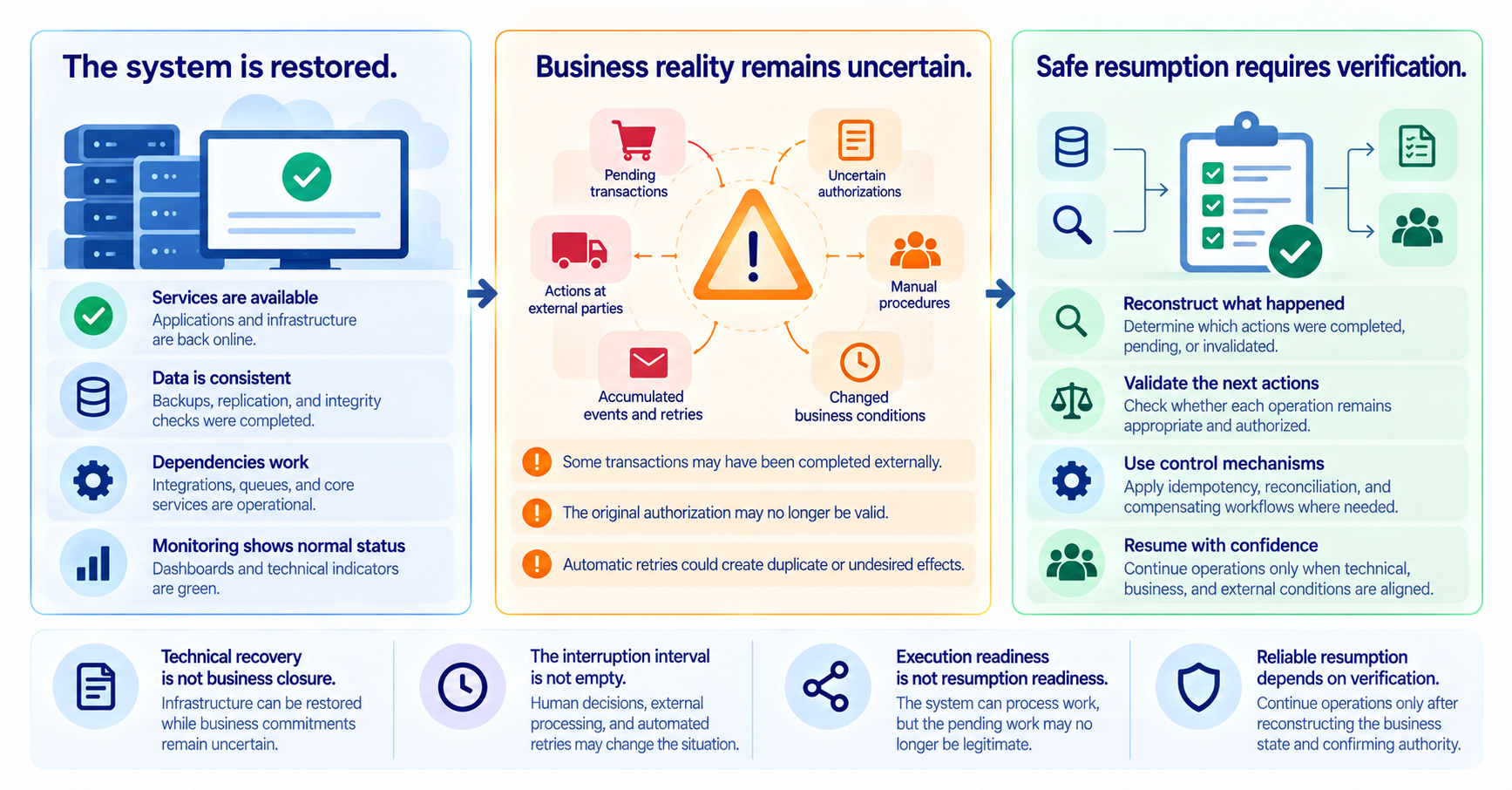
The System Is Back, but the Business Is Not Yet Safe to Resume
Technical recovery can restore infrastructure while leaving business transactions, authorizations, and obligations unresolved. Reliable resumption requires understanding what happened during the interruption and determining which actions can safely continue. Recovery Restores a System to a State, Not Necessarily to Its Business Reality A major system interruption creates an apparently straightforward objective: restore the affected services,…
-
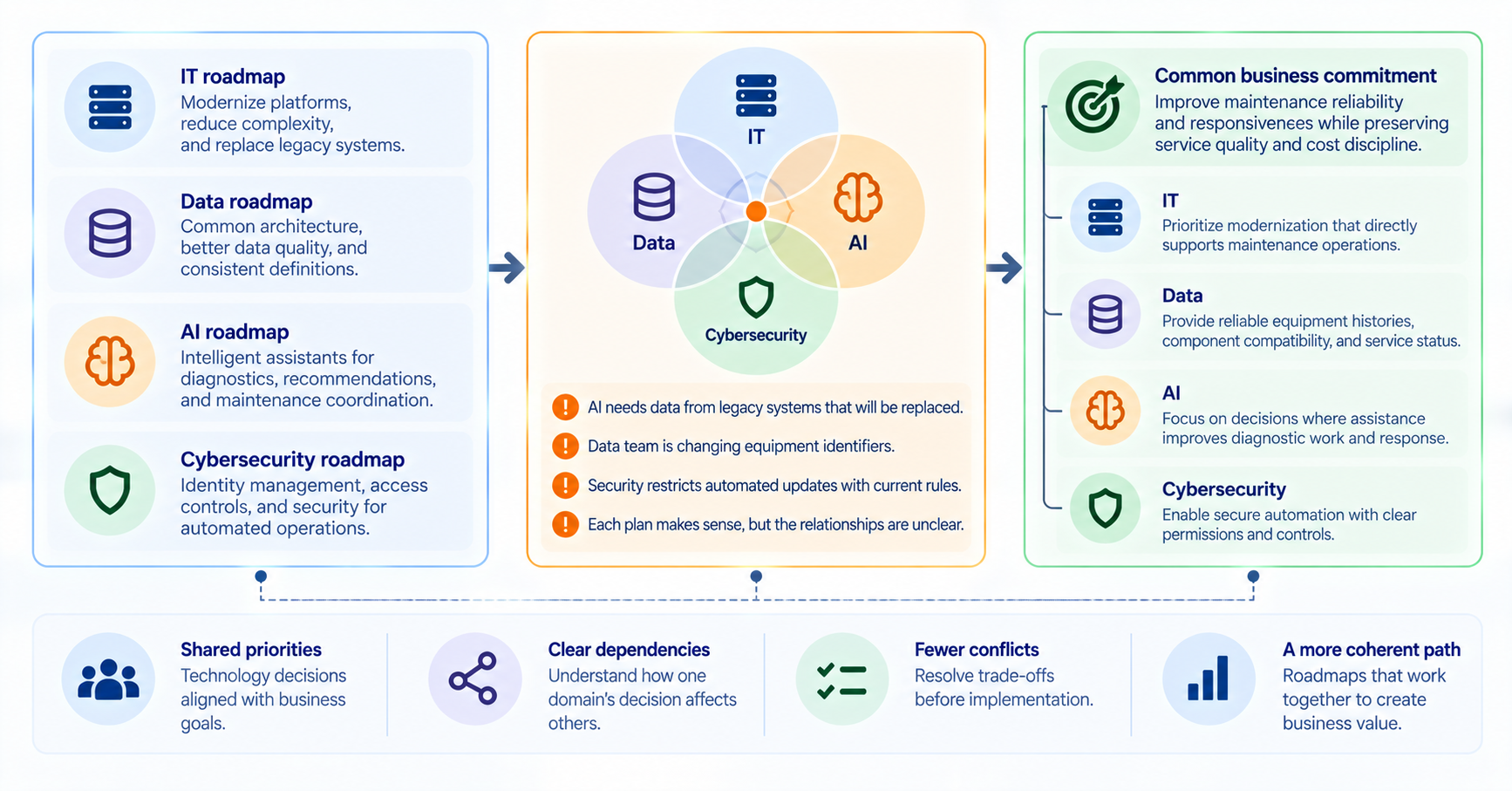
The Strategy Between the Roadmaps
Enterprise technology strategy is becoming more difficult because IT, data, cybersecurity, and artificial intelligence increasingly evolve through different priorities, investment cycles, and operating assumptions. The challenge for business leaders is no longer simply developing strong strategies for each domain, but ensuring that their combined decisions create an organization capable of moving in the same direction.…
-
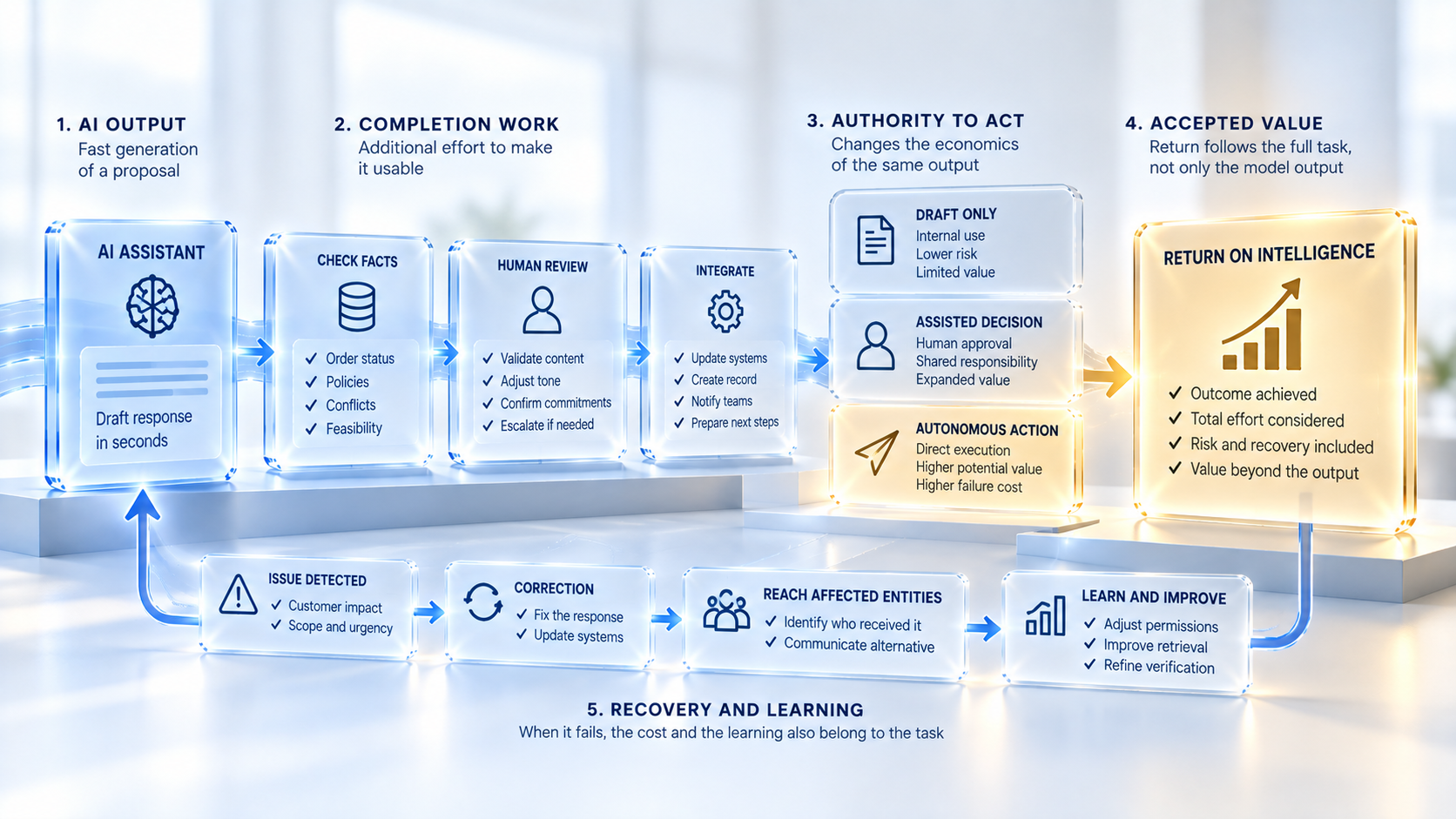
Return on Intelligence Belongs to the Whole Task
Return on Intelligence follows AI capability into accepted value. Its economics depend on the full work required to make a result usable, the authority granted to act on it, and the ability to recover when it fails. The answer is still on its way An AI assistant drafts a customer response in seconds. Before that…