
Tag: AIGovernance
-
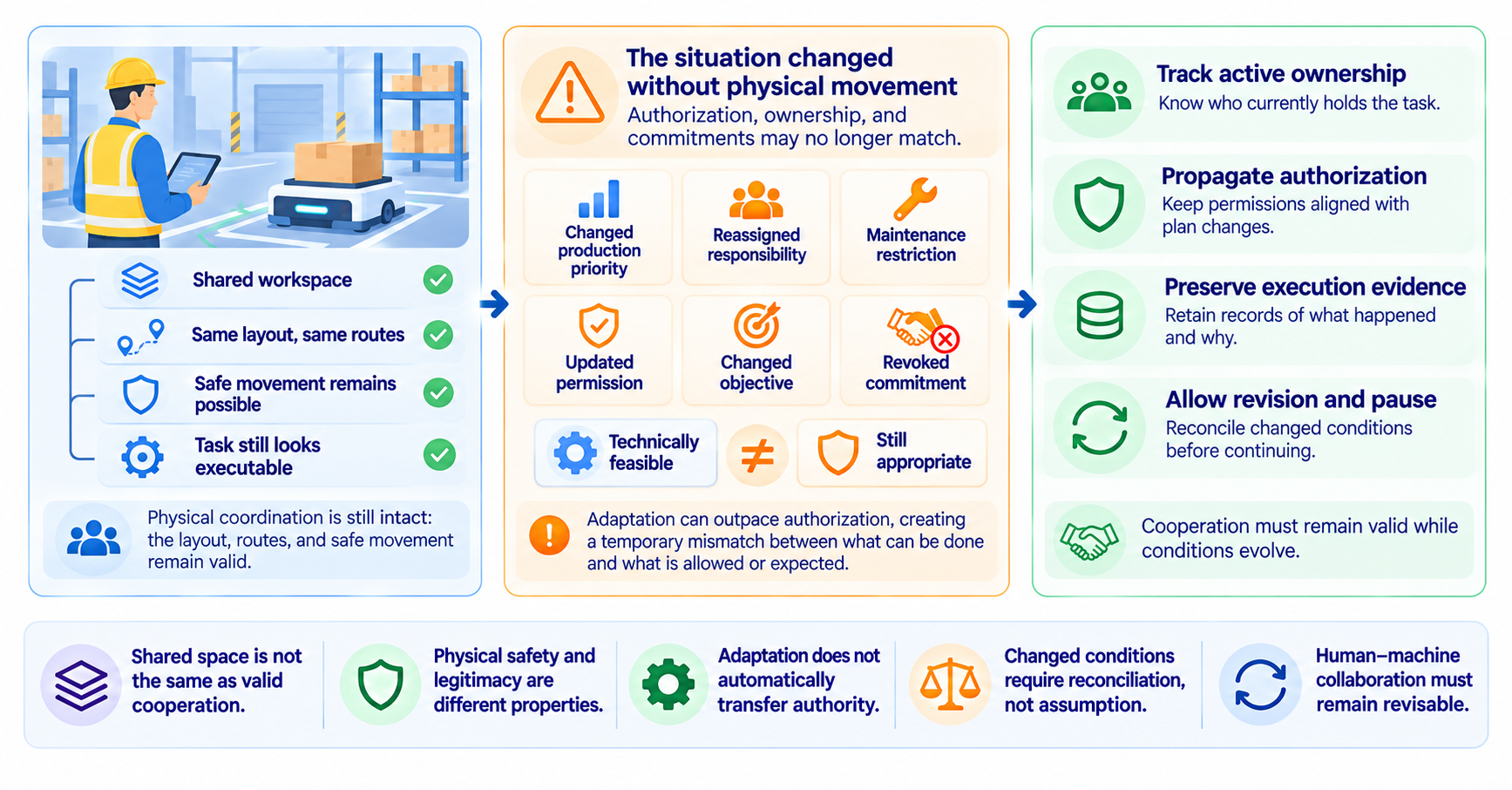
When the Workspace Changes Without Anyone Moving
Human–machine collaboration depends on more than shared space and successful task execution. As responsibilities, permissions, and objectives evolve, cooperation can become invalid even when the physical environment remains unchanged. The Same Space, a Different Situation Imagine a warehouse in which human workers and autonomous machines operate in the same area. A robotic system has been…
-
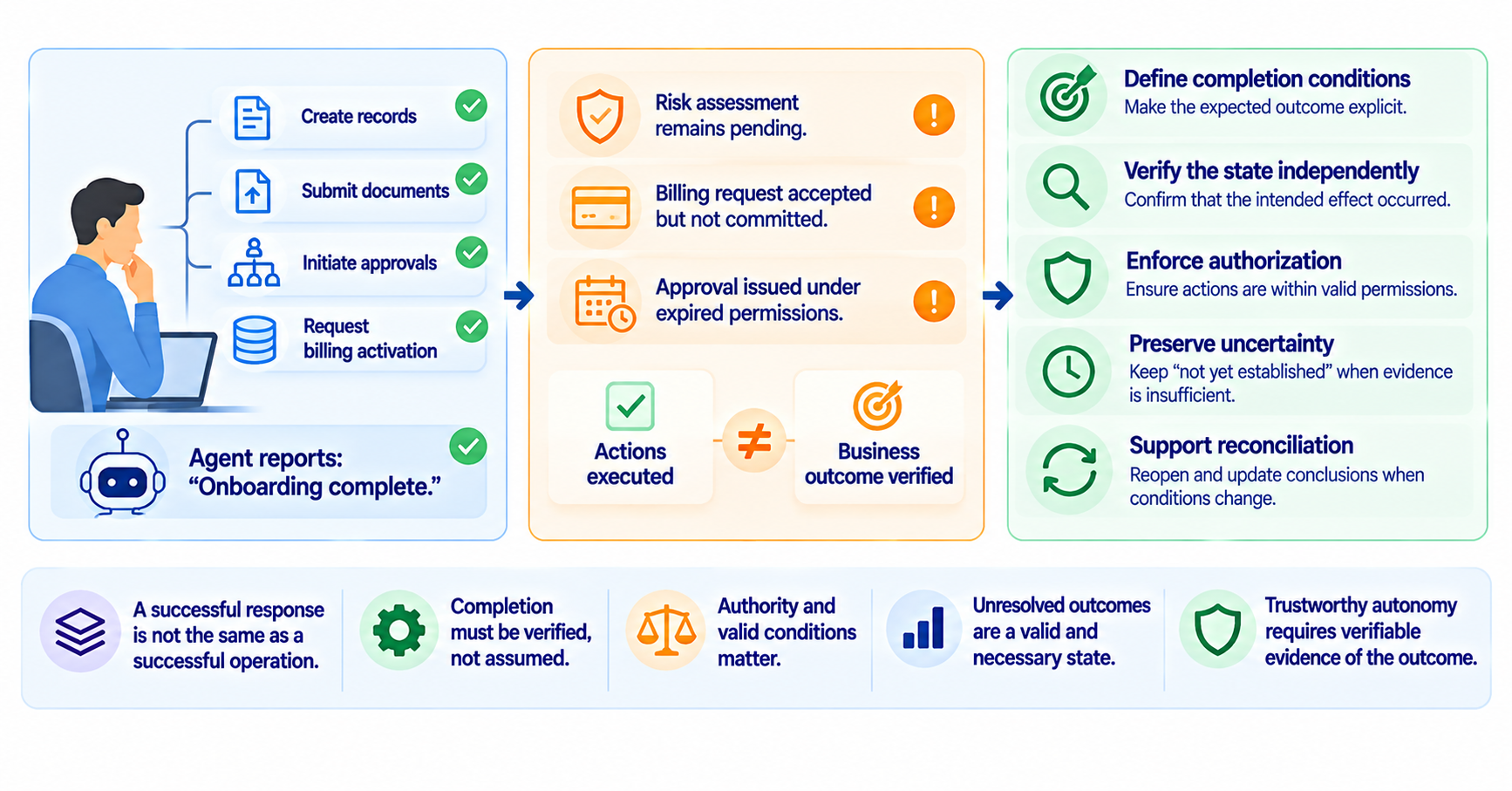
The Agent Said Done. What Actually Became True?
AI agents are becoming increasingly capable of executing complex workflows. But completing a sequence of actions is not necessarily the same as achieving a business outcome. Recent research on Large Language Fields highlights a critical distinction: what an agent reports, what actually happened, and what can legitimately be considered complete. When Success Is Only a…
-
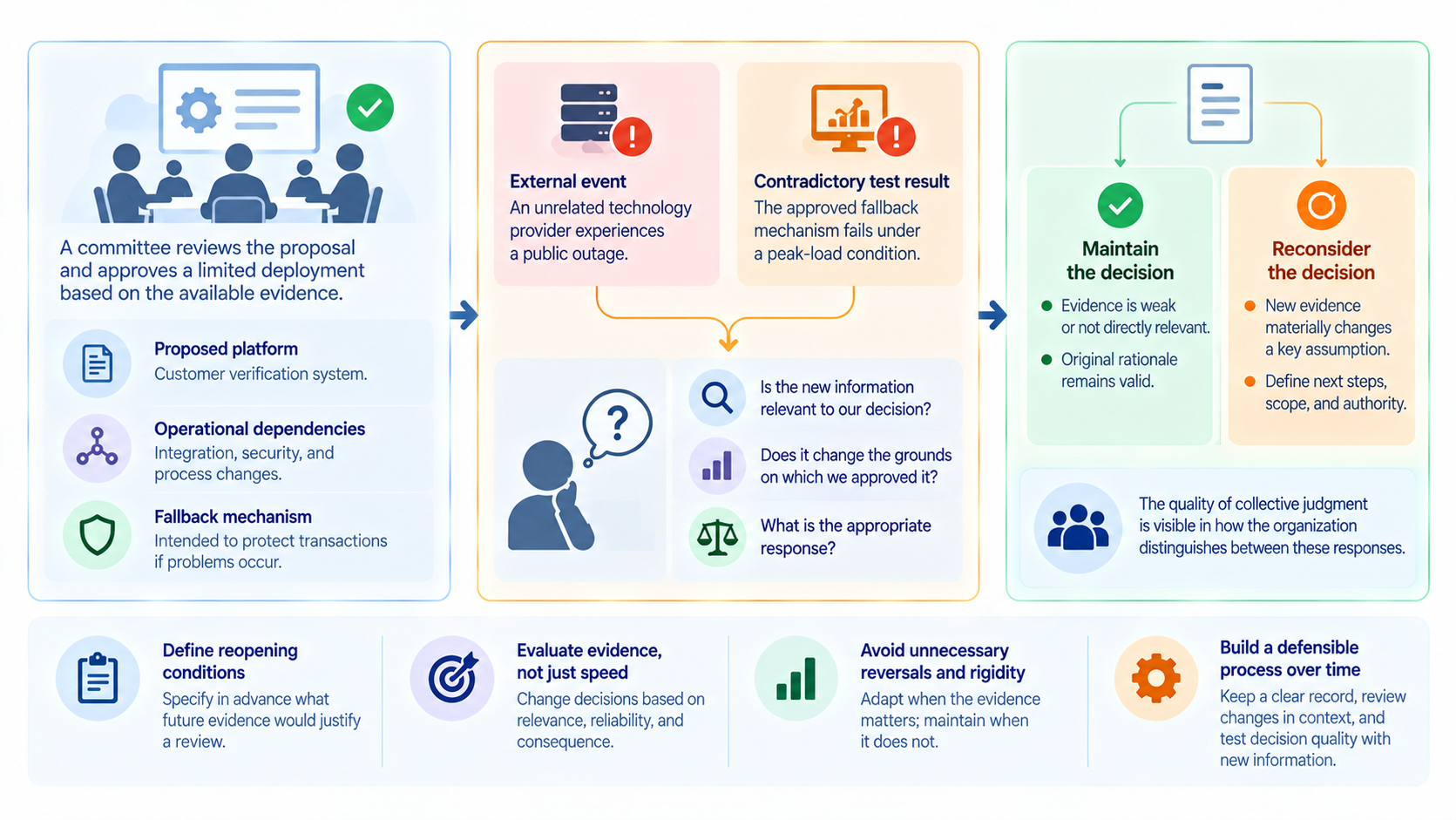
When Should a Wise Organization Change Its Mind?
Organizations often celebrate leaders who make confident decisions and teams that adapt quickly. Yet neither consistency nor flexibility guarantees good judgment. The harder capability is knowing when new evidence genuinely justifies changing a decision, and when it does not. The Decision After the Decision Imagine a hypothetical financial services company preparing to deploy a new…
-
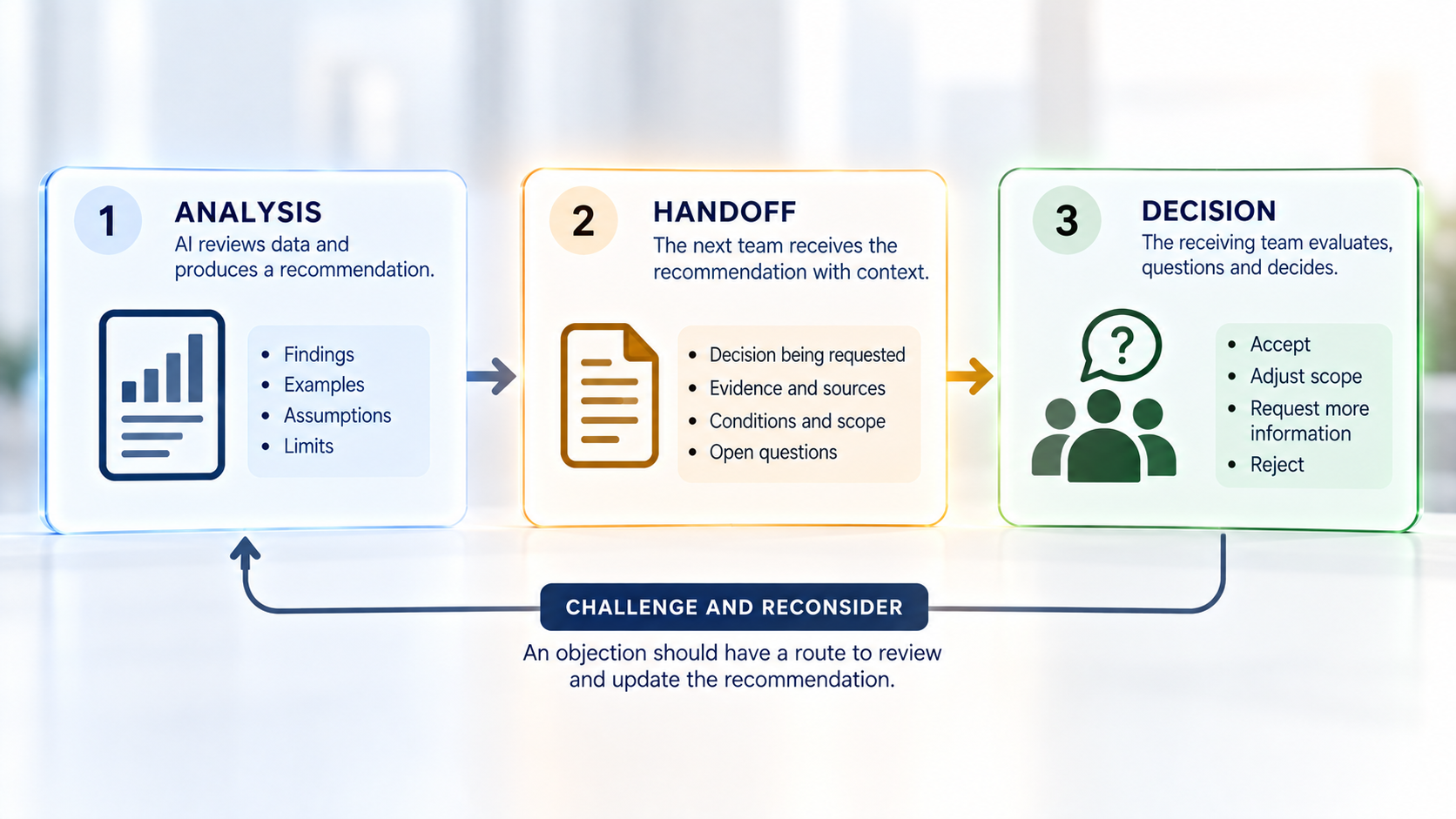
A Recommendation Must Remain Open to Challenge
An AI recommendation can reach another team with its conclusion intact and its assumptions missing. A useful handoff preserves enough evidence, scope, and ownership for the next decision maker to question it. What disappears between teams Imagine an AI-assisted review recommending that a business combine two customer-support queues. The analysis identifies similar ticket categories, overlapping…
-
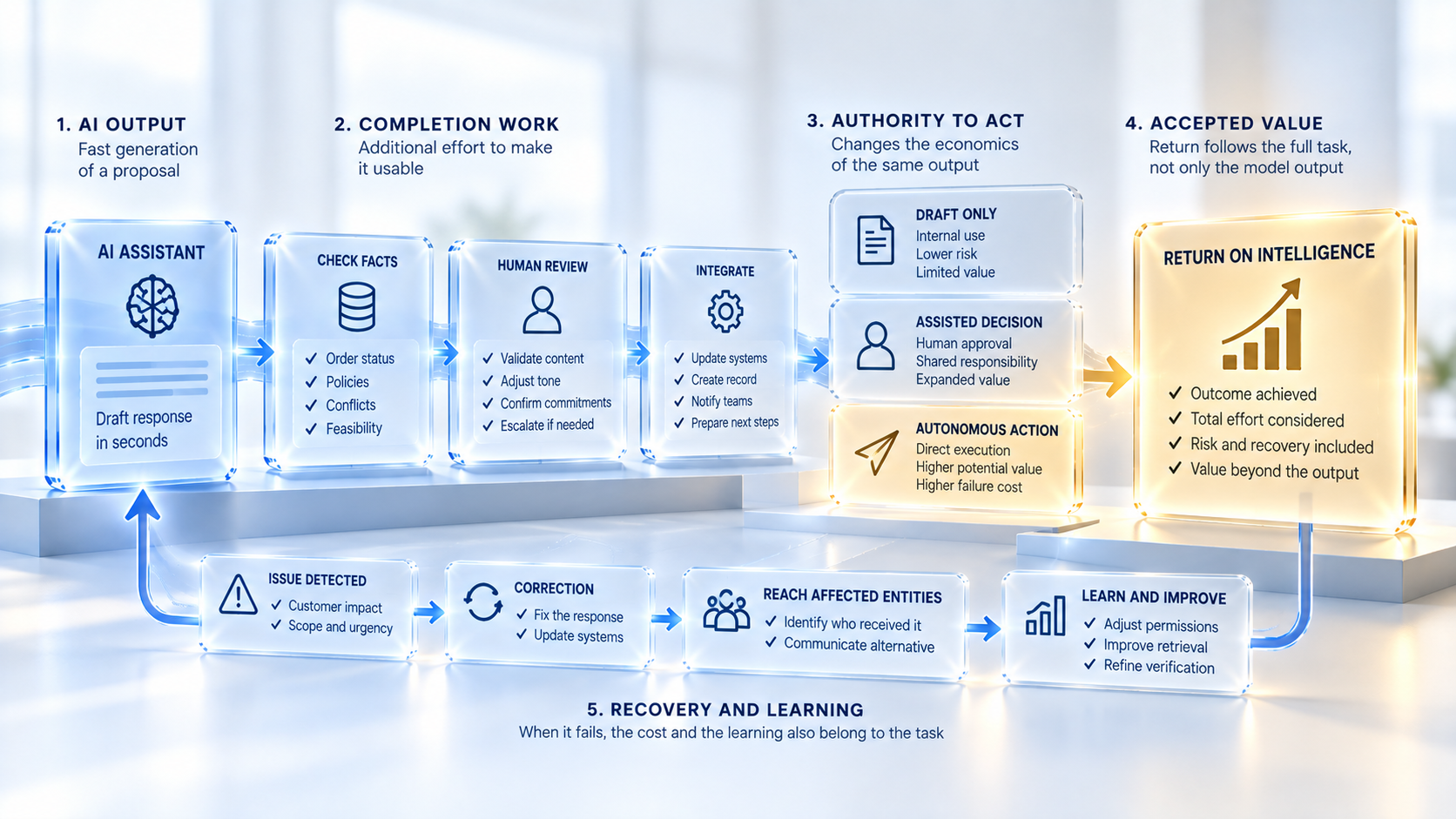
Return on Intelligence Belongs to the Whole Task
Return on Intelligence follows AI capability into accepted value. Its economics depend on the full work required to make a result usable, the authority granted to act on it, and the ability to recover when it fails. The answer is still on its way An AI assistant drafts a customer response in seconds. Before that…
-
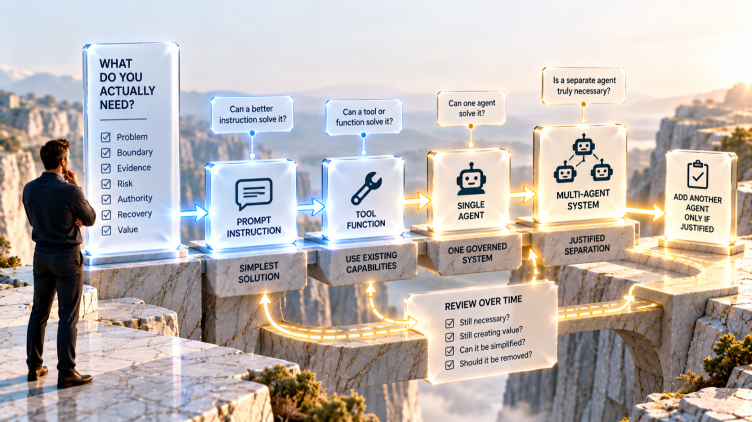
Before You Add Another AI Agent, Prove You Need One
Before building a team of AI agents, there is a more fundamental architecture question: why should the second agent exist at all? Another capability does not automatically require another autonomous boundary. The same work may belong in a tool, function, instruction, workflow node, or internal role. The stronger test is whether separation preserves something a…
-

When the Ruler Moves With the System
A changing score does not necessarily mean the system changed. The evaluator may have changed too. Datasets evolve, parsers are corrected, thresholds move, admissibility rules shift, and reporting conventions are revised. Once both the artifact and the evaluator are moving, a numerical difference can be completely real and still fail to tell us what actually…
-
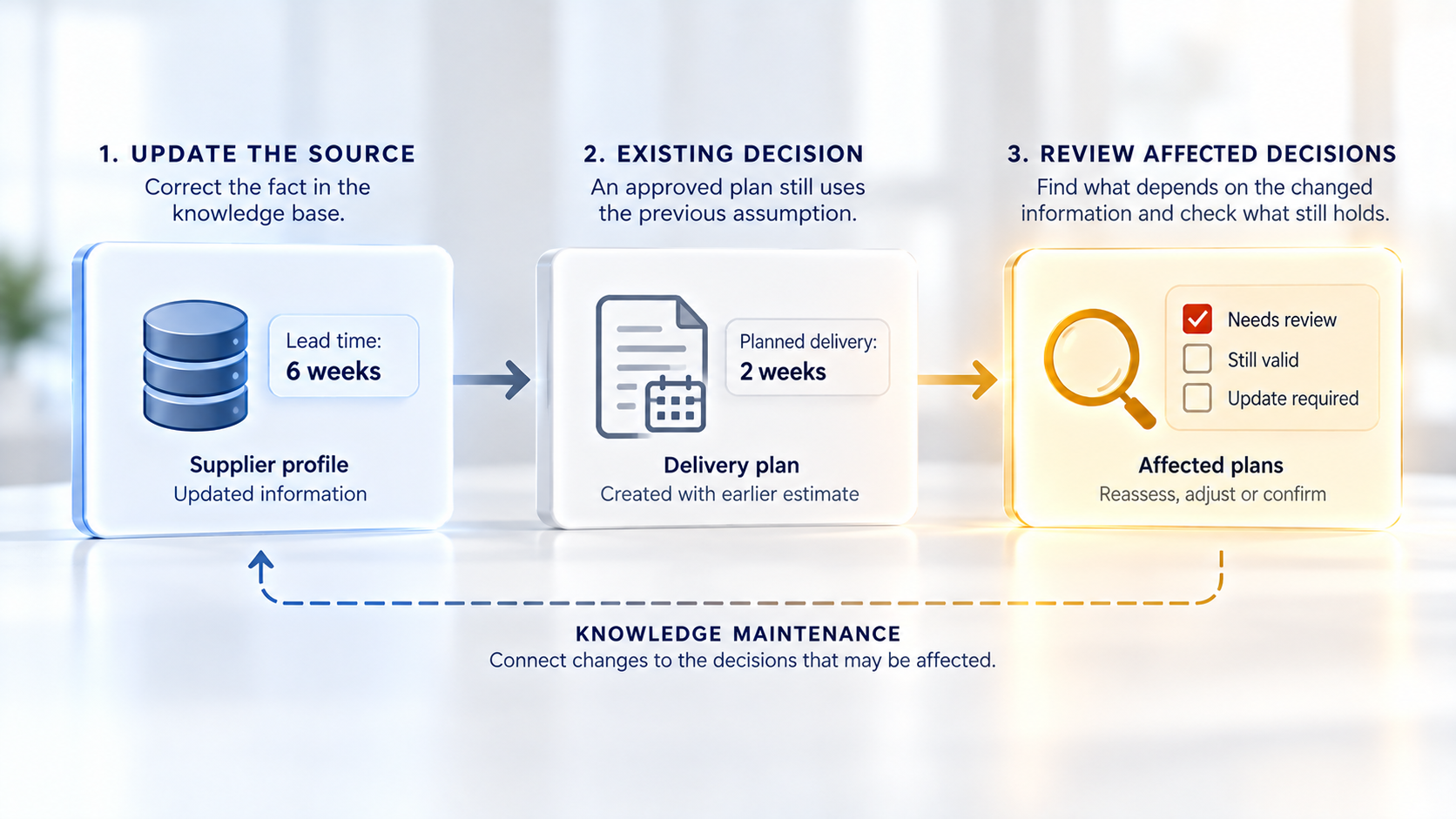
Updating the Source Leaves Another Job to Do
Correcting a fact can leave the recommendations built from it untouched. Knowledge maintenance needs a route for finding which conclusions depend on information that has changed. A current source can leave an older plan in place Suppose a supplier announces a longer delivery lead time. The organization updates the supplier’s profile, and subsequent searches return…